Travel agency client retention is the practice of turning a traveler who booked once into someone who books with you again and again. It is the quiet growth lever most agencies underuse: winning a brand-new lead costs far more time and money than re-engaging someone who already trusts you and already knows how you work. This guide covers why retention matters for a travel agency, how to build a simple system around your past clients, the follow-up rhythm that keeps you top of mind between trips, and the metrics that tell you whether any of it is actually working.
Why travel agency client retention beats chasing new leads
Every new lead starts from zero. You have to earn attention, establish trust, learn their travel style, and prove you are worth more than the online booking tools they could use instead. A past client has already crossed all of those lines. They have traveled on a trip you designed, seen the quality of your work, and (if the trip went well) come home with a reason to call you first next time.
That head start is why retained clients are so valuable. They convert faster because the trust already exists. They tend to spend more, because a good first trip raises their comfort level for the next one. And they are the source of the referrals that quietly fill the top of your pipeline. An agency that only ever hunts for new leads is running up a down escalator; an agency that also keeps its past travelers close builds a base that compounds year over year.
None of this happens by accident. Most repeat bookings are lost not because the client was unhappy, but because the agency simply went quiet after the trip ended, and by the time the traveler was dreaming about the next one, someone else was in front of them.
Retention is not the same as referrals or onboarding
It helps to separate three things agencies often blur together.
Onboarding is what happens right after a booking is confirmed (welcome, documents, pre-departure details) to make a single trip run smoothly. Referrals are about turning a happy client into a source of new leads through word of mouth. Retention is different from both: it is about turning the same client into a repeat buyer of their own next trip.
The system you build for retention therefore looks different. It is not a one-time checklist tied to a trip, and it is not an incentive to bring a friend. It is an ongoing relationship you maintain with people who have already traveled with you, so that when their next trip forms in their mind (a year, sometimes two, later), you are the obvious first call.
Build a system around your past travelers
Retention falls apart when “keeping in touch” depends on memory. The fix is to treat your past clients as a managed segment, not a pile of old email threads.
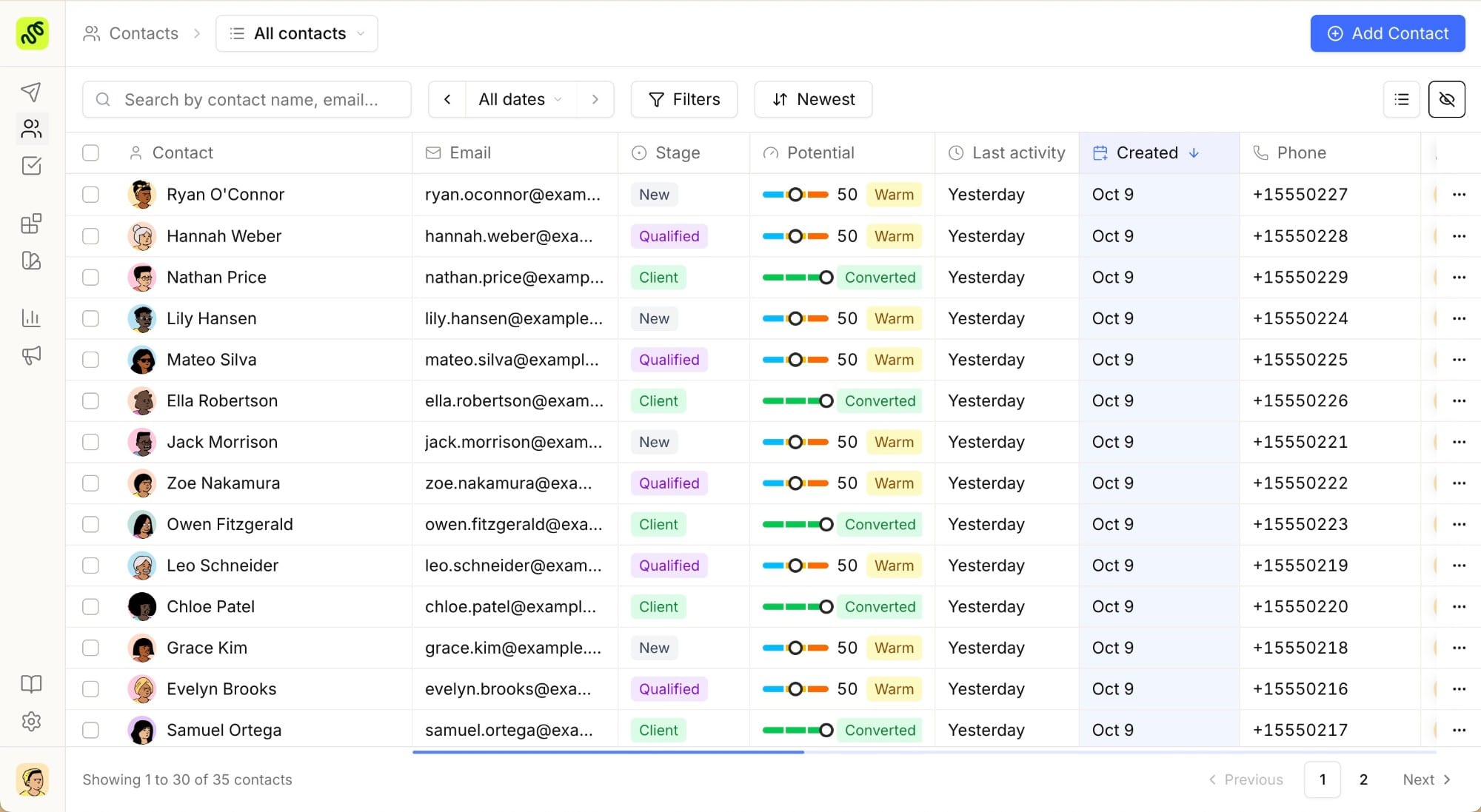
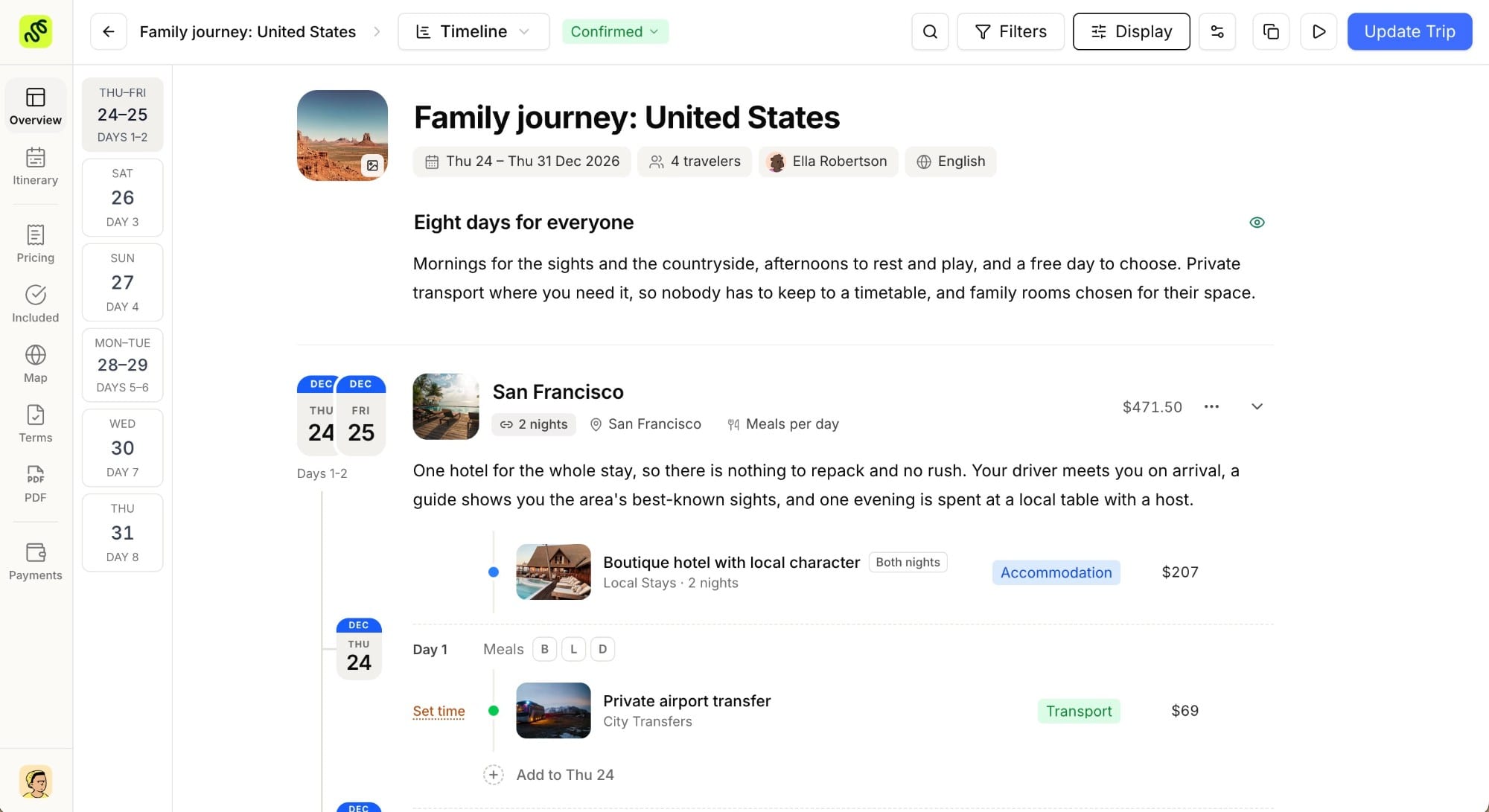
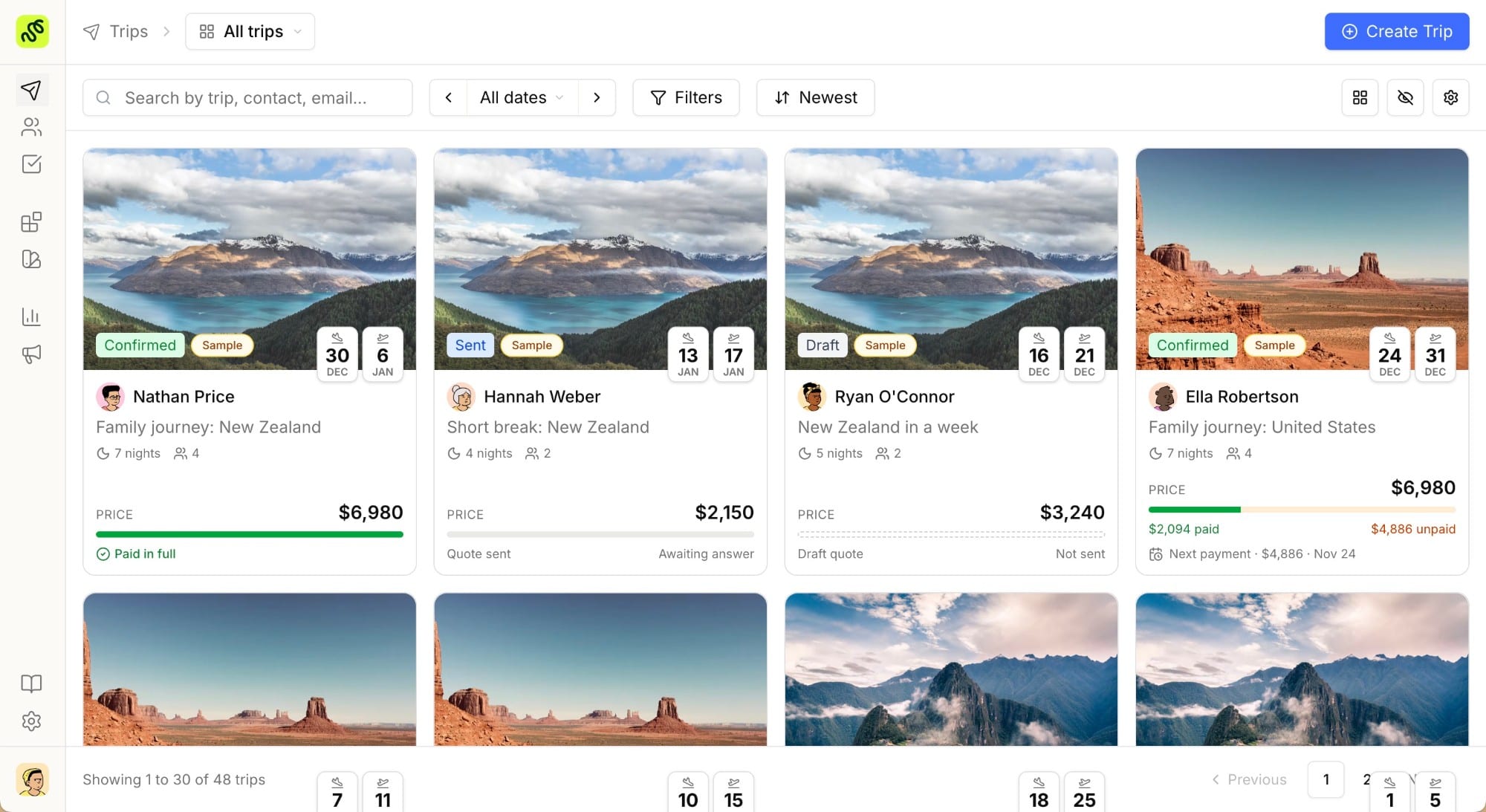
Start by making sure every traveler who has completed a trip is tagged as a past client in your CRM, with their trip history attached: where they went, when, party size, and what they loved or avoided. A travel CRM built for agencies keeps this trip context on the contact record itself, so you are not reconstructing it from an inbox each time.
From there, segment the group so your outreach can be relevant instead of generic:
- By recency: travelers who returned in the last few months versus a year or more ago.
- By trip type: honeymooners, multigenerational families, solo adventurers, repeat cruisers.
- By value: the clients whose bookings, and referrals, justify a more personal touch.
Even a small independent travel designer can run this with a handful of well-defined segments. The point is not sophistication; it is that a message to “families who traveled with us 10+ months ago” will always land better than a blast to everyone.
The re-engagement rhythm that earns repeat bookings
Once your past clients are organized, the work is staying present without becoming noise. A workable rhythm for most agencies looks like this:
- Post-trip, within a week. A genuine “welcome home”, not a sales pitch. Ask how it went. This is where trust is either reinforced or quietly lost.
- A month or two later. A light, no-ask check-in, or a piece of inspiration tied to something they mentioned wanting to do “next time.”
- Ahead of their next likely window. Many travelers rebook on a roughly annual cycle. Setting a task to reach out a couple of months before the anniversary of their trip puts you in front of them exactly as the next idea is forming.
- Seasonal, all year. A small number of relevant seasonal notes (shoulder-season deals to a region they love, a new route worth knowing about) keep you top of mind between the personal touches.
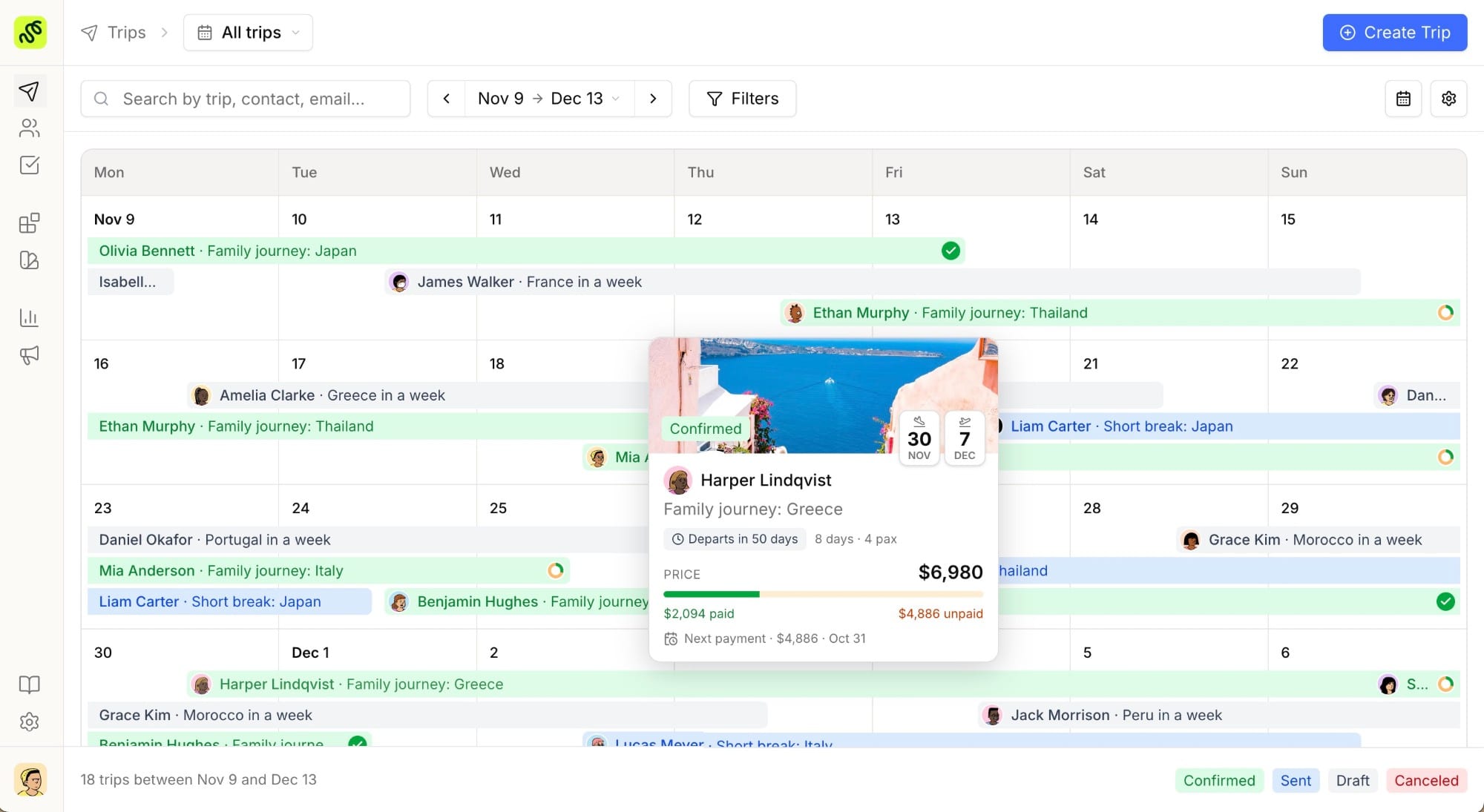
The exact intervals matter less than the fact that they are scheduled, assigned, and not left to chance. Tie each step to a task in your CRM so the next touch surfaces on its own rather than depending on someone remembering.
Personalization is your unfair advantage
The reason a travel agency can out-retain any booking platform is context. You know this client took a slow food-focused trip through Piedmont and mentioned wanting to see more of the same coastline. A generic newsletter cannot use that; you can.
Every re-engagement message should lean on a detail only you would know. Reference the actual destination, the traveler’s name, the thing they said they’d do differently. Offer the next trip, not a trip: a natural progression from where they have already been. That specificity is what separates a note that feels personal from one that feels like marketing.
Measuring travel agency client retention
Retention only improves when you can see it. A few metrics are enough for most agencies:
- Repeat booking rate: the share of clients who book a second trip. This is the headline number.
- Rebooking interval: the typical gap between a client’s trips, which tells you when to time your outreach.
- Repeat revenue share: how much of your booked revenue comes from returning clients versus new ones.
Watching these over time tells you whether your re-engagement is working or just filling inboxes. TravelBuilderPro’s analytics dashboard surfaces booking and client data so you can track the repeat side of the business, not only new-lead conversion: the half most agencies never measure.
Tools that make retention repeatable
You can start retention with a spreadsheet and a calendar, but it gets fragile fast: tags go stale, follow-up tasks get missed, and trip history scatters across old emails. A CRM built for the travel workflow keeps the contact, the trip history, the segments, and the scheduled follow-ups in one place, so re-engaging a past client is a two-minute action rather than an afternoon of digging.
TravelBuilderPro’s 7-day trial unlocks full CRM access, which is enough to organize your past travelers and set up your first re-engagement cadence before the first invoice. The public pricing then shows exactly what scales with your team. Either way, the goal is the same: make sure no past client quietly slips away for lack of a follow-up.
Turn one trip into many
Ready to keep your past travelers close and turn one trip into many? Try every feature free for 7 days and organize your client base in a CRM built for travel.
Common questions
01How do you retain travel agency clients?
Retention comes from staying relevant after the trip ends. Tag every past traveler as a client with their trip history, segment them by recency and trip type, and run a scheduled re-engagement rhythm: a genuine welcome home, light check-ins, and a personal note timed to when they are likely to plan again. The key is that these touches are scheduled in a CRM, not left to memory.
02Why is client retention important for a travel agency?
Because a past client is far cheaper to convert than a new lead. They already trust you, tend to spend more on later trips, and are the main source of referrals. An agency that only chases new leads has to replace every client each year; one that retains builds a base that compounds.
03How often should I follow up with past travel clients?
A workable pattern is a welcome-home message within a week of return, a light check-in a month or two later, a personal note a couple of months before their next likely travel window, and a small number of relevant seasonal touches through the year. Relevance matters more than frequency.
04What is the difference between client retention and a referral program?
Retention turns a past client into a repeat buyer of their own next trip. A referral program turns a happy client into a source of new leads through word of mouth. They complement each other, but the systems differ. Retention is an ongoing relationship, referrals are an incentive to introduce others.
05Does a CRM help with client retention?
Yes. A travel CRM keeps each client’s trip history on their record, lets you segment past travelers, and ties follow-up steps to tasks so the next touch surfaces on its own. That removes the single biggest cause of lost repeat bookings: going quiet because no one remembered to reach out.
Summarize this article with AI
Opens your assistant with the question already written.