Rezometry is a capable platform for multi-day tour operators and DMCs, built to carry a trip from the first inquiry through quoting, reservations, supplier payments and accounting. If you run a high-volume operation with deep back-office needs, it earns its keep. If you are an independent travel designer or a small-to-mid-size agency, you may be looking for a lighter Rezometry alternative: one that still builds polished itineraries and keeps your leads in order, without the weight (and the quote-based pricing) of an operator-grade reservation system. This guide compares the two honestly, shows where each one wins, and explains what a switch actually involves.
What Rezometry does well
Rezometry describes itself as a comprehensive reservation, operations and business-management platform built specifically for small and mid-size multi-day tour operators. That focus is its strength, and it is worth understanding before you decide whether you need all of it.
Built for multi-day tour operators and DMCs
The product is designed around operators who assemble multi-day trips and fixed packages from many suppliers, including inbound operators and DMCs. If your business is buying ground services at scale, contracting rooms and seats, and reselling them as packaged departures, Rezometry is built for that shape of work rather than for one-off bespoke proposals.
Deep supplier and finance tooling
Where Rezometry goes deep is the back office. Reviewers point to its reservation system, rate handling, payment processing and accounting features as the core of the platform. For an operator juggling net rates, allotments and supplier payables across a season, that depth is the point: the money side is handled inside the same tool that holds the bookings.
One system from inquiry to accounting
Rezometry aims to cover the whole cycle in one place: lead, quote, itinerary, reservation, payment and report. For a team that wants a single operational source of truth and is willing to invest in setup and training, consolidating on one operator-grade system is a reasonable call.
Where a Rezometry alternative makes sense
None of the above helps if your business is smaller or more design-led. A reservation-and-accounting platform solves problems you may not have yet, and it asks you to adopt (and pay for) machinery built for a different scale.
You are an independent designer or small agency
If you build tailor-made trips, sell a modest number of high-value itineraries, and win work on the quality of your proposals rather than on packaged inventory, a tour-operator reservation engine is more tool than the job needs. You want a fast itinerary builder and a tidy pipeline, not a channel manager and an allotment ledger.
You want transparent, self-serve pricing
Rezometry does not publish pricing on its own site: it is quote-based and demo-led, and third-party directories list a starting figure near 200 USD per month without confirming what it covers. That is normal in the operator-software segment, but it means you cannot size the cost yourself before a sales call. TravelBuilderPro publishes its full pricing openly, so you know the number before you commit.
You need to try before you commit
Rezometry’s model is a demo on request rather than a self-serve trial. If you would rather build a real proposal in the actual product before deciding, that gap matters. TravelBuilderPro gives you a 7-day full-feature trial on signup, which converts to the plan you choose unless you cancel.
Rezometry vs TravelBuilderPro: the comparison
The table below sets the two side by side. Competitor details come from Rezometry’s site and third-party software directories (Capterra, GetApp, Software Advice) and were current at the time of writing. Treat the quote-based items as a prompt to confirm with Rezometry directly.
| Feature | Rezometry | TravelBuilderPro |
|---|---|---|
| Target user | Small and mid-size multi-day tour operators, DMCs, wholesalers | Independent designers, small-to-mid-size agencies |
| Free plan | Nonepricing is quote-based | 7-day free trial |
| Free trial | Demo on request, no self-serve trial | 7 days, every feature, cancel anytime |
| Pricing | Quote-based and demo-led, not published on its site | Starter from €22/user/month yearly, Professional €39, Premium €62 |
| Itinerary builder | Yesmulti-day packages with pricing rules | Yesday-by-day itineraries and branded proposals |
| Built-in CRM | Client database with lead tracking and segmentation | Yescontacts, leads, pipeline, web forms, tasks |
| Supplier and finance depth | Strong: reservations, rates, payments, accounting modules | Suppliers, rates and payment schedules, accounting via API or Zapier |
| Booking analytics | Operational and financial reporting | Real-time dashboard with conversion and revenue KPIs |
| Multi-language proposals | Not a documented focus | 66 languages out of the box |
| Hosting region | Not published | EU, SOC 2 compliant |
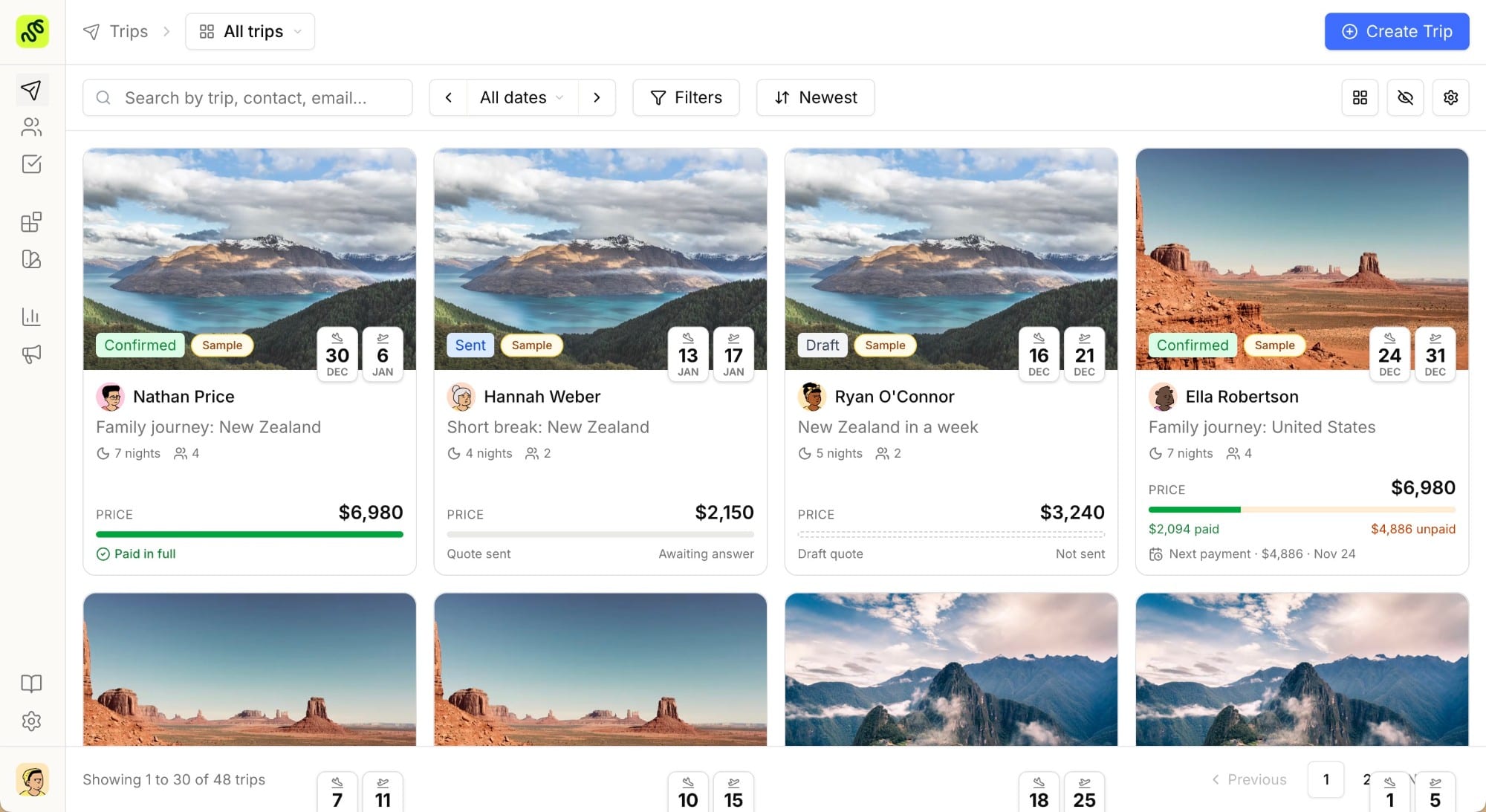
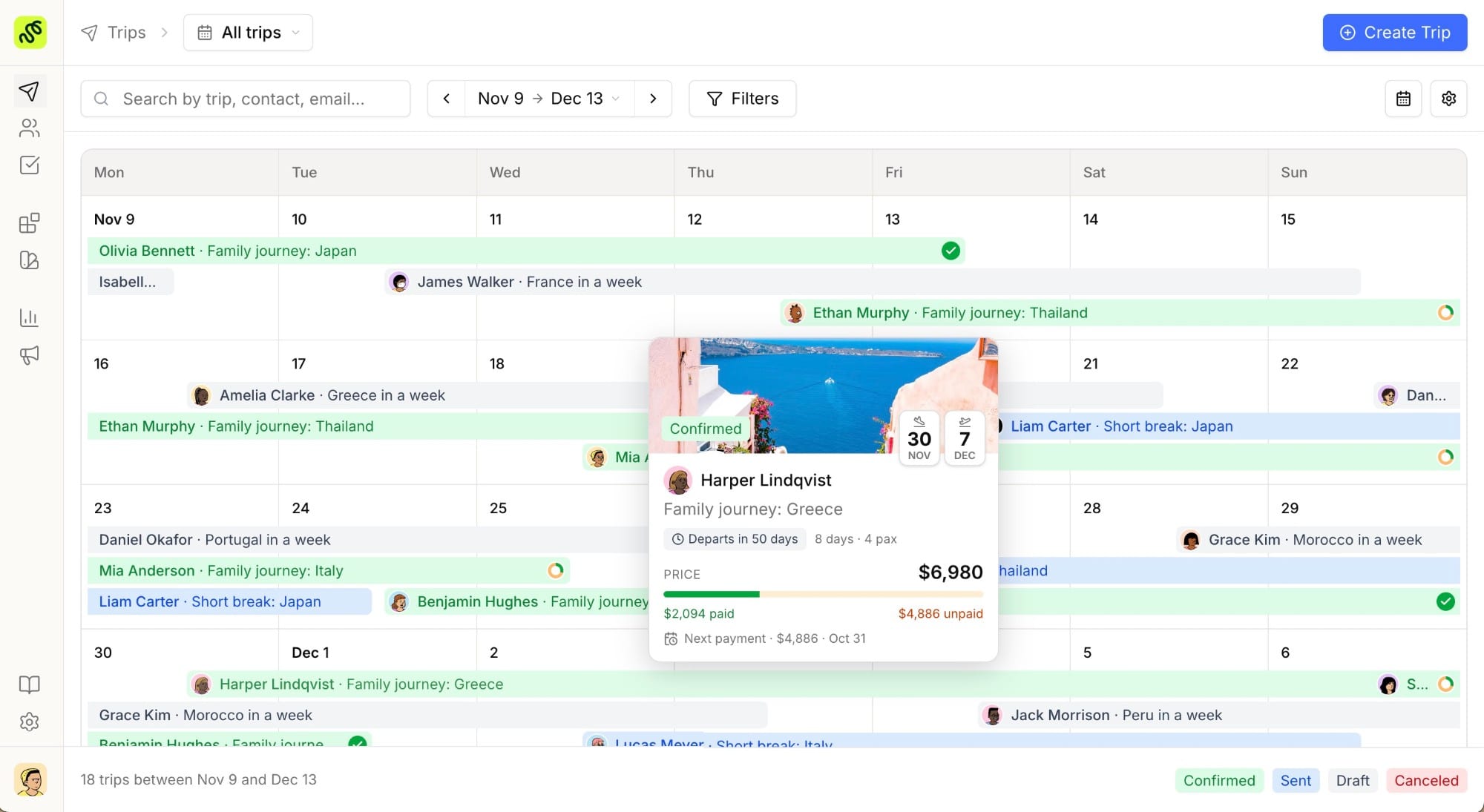
The headline difference is scope. Rezometry is an operations-and-accounting platform that also builds itineraries. TravelBuilderPro is a proposal-and-client platform that also tracks the money: itinerary building, CRM and analytics in one workspace, priced for a team that does not need a full reservation engine.
How TravelBuilderPro approaches the same jobs
The useful question is not which tool has more modules, but which one matches the work you actually do each week. Here is how TravelBuilderPro covers the three jobs a smaller agency cares about most.
Proposals and itineraries
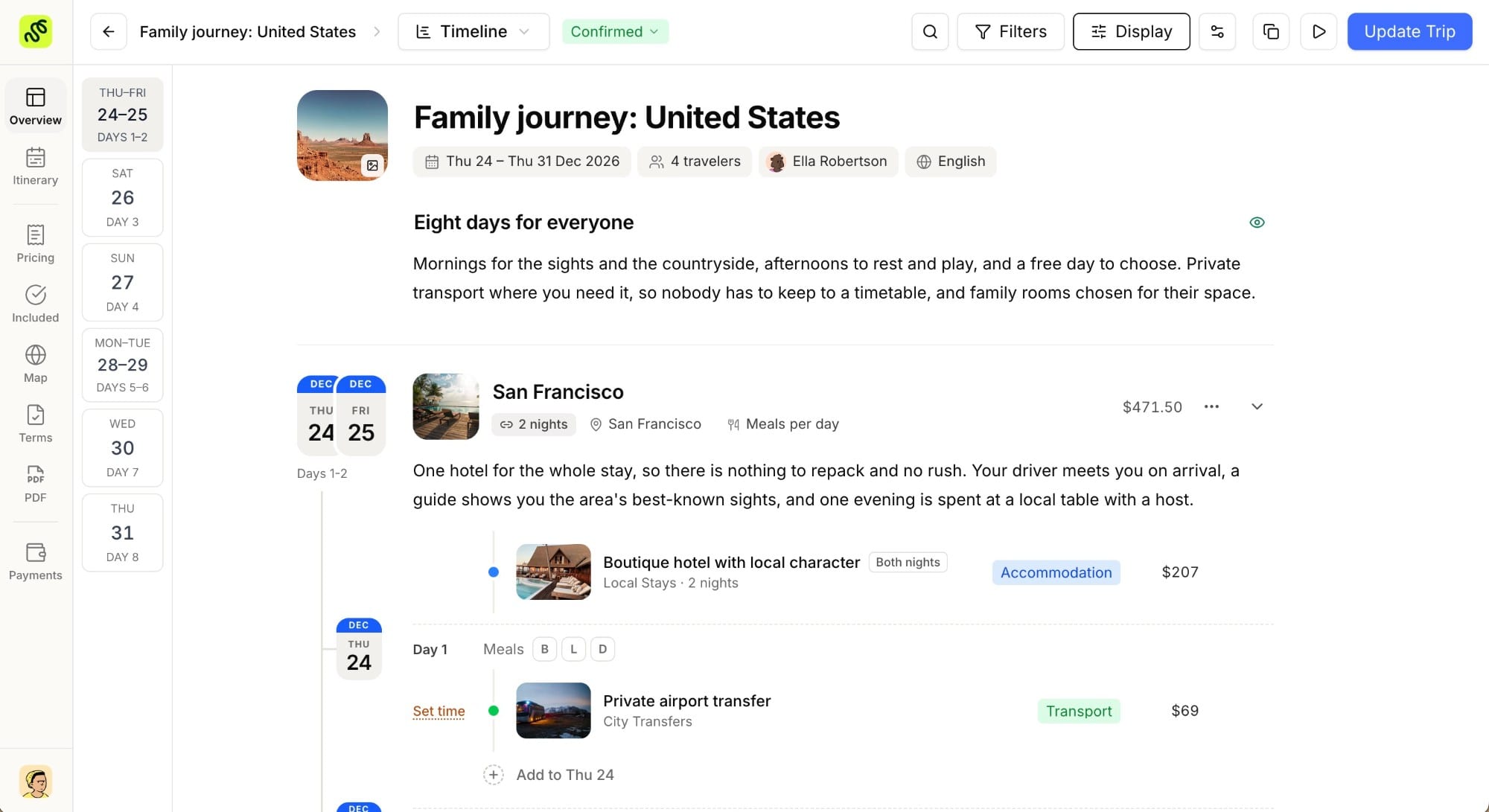
The itinerary builder is the centre of gravity: day-by-day plans, hotels, flights and activities laid out as a branded, client-facing proposal you can share as a live link rather than a static PDF. Proposals can be produced in 66 languages, which matters if you serve international clients.
Clients, leads and conversion
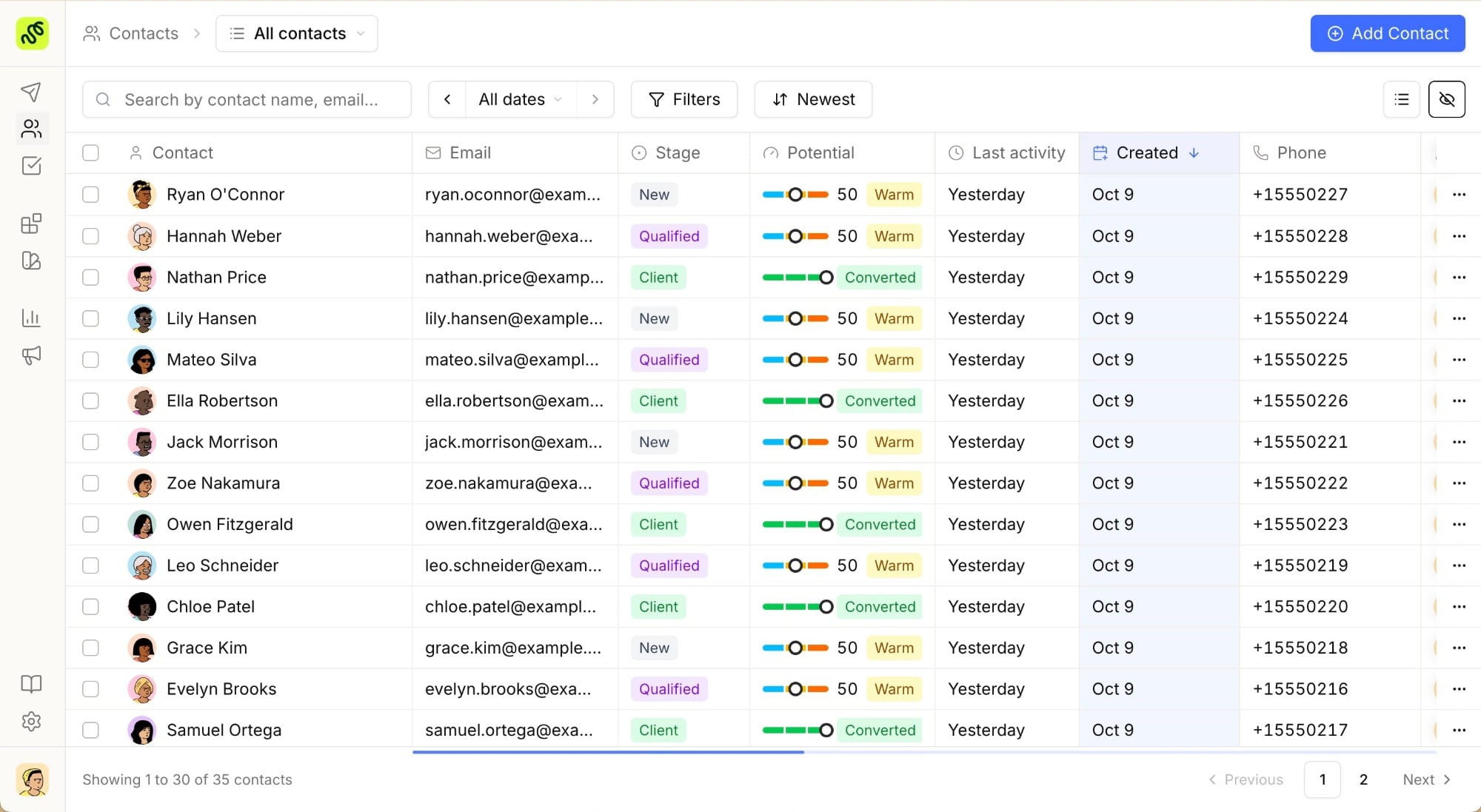
The built-in CRM keeps contacts, leads, a pipeline, web forms and tasks together, so an inquiry does not fall through the gap between a spreadsheet and your inbox. Because the CRM and the itinerary builder share one record, a lead’s whole history (what you quoted, what they opened, what they booked) lives in one place.
Suppliers, payments and reporting
TravelBuilderPro handles suppliers, rates and payment schedules for the way a small agency works: keeping your supplier base in one trustworthy place and structuring deposits and balances against supplier deadlines. It does not try to be a full accounting ledger. Where you need that, it connects to your accounting stack via the API or Zapier, and the analytics dashboard reports conversion and revenue in real time rather than as end-of-month exports.
Switching from Rezometry: what to expect
Moving off any operator platform is a project, not an afternoon. The good news for most small agencies is that you are usually migrating a client list and a handful of templates, not a decade of packaged inventory.
Moving your data
Contacts import from CSV on day one, so your client database comes across without manual re-entry. Export your contacts from Rezometry, map the columns, and import them into the CRM during your trial.
Rebuilding templates and suppliers
Itinerary templates are rebuilt rather than ported, which is usually faster than it sounds: most designers find a few strong templates cover the bulk of their trips. Supplier records are added manually or via the API as you go. The 7-day trial is enough time to rebuild one or two real trips and confirm the fit before you move anything else.
When to stay on Rezometry
Be honest about scale. If you run high-volume multi-day departures, contract inventory across many suppliers, and need reservation and accounting depth in one system, Rezometry (or a comparable operator platform) is likely the better home. If Rezometry’s operator depth is what draws you, it is worth weighing Tourwriter in the same bracket before you decide. TravelBuilderPro is the stronger pick when design, proposals and conversion matter more than back-office reservation machinery.
See how it fits your own trips
The fastest way to judge a Rezometry alternative is to build one of your real itineraries in it and watch a proposal come together. Try every feature free for 7 days and rebuild a trip you already know, so you are comparing the two tools on your own work rather than on a feature list.
Common questions
01Is TravelBuilderPro a good Rezometry alternative?
For independent designers and small-to-mid-size agencies, yes. It covers the jobs most teams rely on daily (itinerary building, CRM, proposals and analytics) with transparent pricing and a self-serve trial. For large multi-day operators with deep reservation and accounting needs, Rezometry remains the more specialised platform.
02How much does TravelBuilderPro cost compared with Rezometry?
TravelBuilderPro publishes its plans: Starter from €22/user/month billed yearly, Professional €39 and Premium €62. Rezometry does not publish pricing on its site: it is quote-based after a demo, so a like-for-like comparison is only possible once you have a written quote.
03Can I import my Rezometry data into TravelBuilderPro?
Contacts import from CSV on day one. Itinerary templates are rebuilt during onboarding, and supplier records are added manually or through the API. Most of this fits inside the 7-day trial window.
04Does TravelBuilderPro handle DMC and supplier workflows?
For independent designers and small-to-mid-size DMCs, yes: supplier management, rates, payment schedules, multi-currency and multi-language proposals are built in. For very large wholesalers with full accounting and allotment needs, an operator-grade platform will go deeper.
05Is there a free trial?
Yes. TravelBuilderPro offers a 7-day full-feature trial on signup, with every feature available and the option to cancel anytime. It converts to the plan you select unless you cancel first.
Summarize this article with AI
Opens your assistant with the question already written.