Travel agency customer lifetime value is the total profit a client brings you across every trip they book, not just the first one. If you only ever look at the trip in front of you, you are flying blind on the number that should shape the whole business. A traveler who books once and a traveler who books every second year for a decade are worth wildly different amounts, and they deserve wildly different attention. I spent ten years running a tour operator before building software for agencies, and moving from counting bookings to counting clients was the single change that made our numbers finally make sense.
How to calculate travel agency customer lifetime value
The formula is simpler than the acronym suggests. You only need three numbers, and you already have all of them somewhere in your records.
The three numbers you actually need
Start with average booking value: what a typical trip is worth to you. Multiply it by trips per client per year, which for most bespoke agencies is well under one, and then by the number of years a client keeps coming back. That gives you lifetime revenue. Multiply that by your gross margin and you have lifetime profit, which is the version worth acting on.
In short: average booking value × trips per year × client lifespan × margin.
A worked example
Say your average trip is worth 4,000, a loyal client books roughly every 18 months (about 0.65 trips a year), they stay with you for 6 years, and your margin is 15 percent. That is 4,000 × 0.65 × 6 × 0.15, or about 2,340 in profit per client over the relationship. The first trip looked like one 600-margin sale. The client is worth nearly four times that.
Revenue or margin: which CLV to use
Both have a place. Revenue-based lifetime value is easier to explain and fine for spotting your best clients. Margin-based value is the one to use the moment you decide how much to spend winning a client, because it reflects what you actually keep after suppliers are paid. If you are unsure how margin is built from net rates and markup, settle that first: a lifetime value calculated on revenue you never banked will flatter every decision you make with it.
Why lifetime value beats chasing new leads
Agencies pour effort into the top of the funnel and almost none into the number that acquisition is supposed to grow. That is backwards.
The cost of a one-trip relationship
Winning a brand-new client is expensive: advertising, a slow discovery call, a proposal that may never convert. If that client takes one trip and disappears, you paid full price for a single sale. The economics of a custom-travel business only work when that acquisition cost is spread across several trips, which is exactly what lifetime value measures.
What a repeat client is really worth
A returning client costs almost nothing to reactivate, trusts your judgment, argues less about price, and refers friends who arrive pre-sold. None of that shows up in a per-booking report. It shows up in lifetime value, and it is usually the difference between an agency that grows and one that runs on a treadmill of new leads. I go deeper on the follow-up system in the piece on client retention, but the mindset starts here.
Segment CLV instead of averaging it
A single agency-wide average is the most common mistake I see, and it hides the clients who matter most.
Why one average hides your best clients
Average a luxury safari client against a long-weekend city-break client and you get a number that describes neither. Act on that blended figure and you will under-serve the travelers funding your business while over-investing in ones who will never book twice.
Grouping clients by value and trip type
Split your base into a few honest tiers: high-value repeat clients, occasional bookers, and one-off travelers. Calculate lifetime value for each. Most agencies find a small group of clients produces the majority of lifetime profit, and that group deserves a different level of care, not the same newsletter everyone else gets.
Spotting a high-value client early
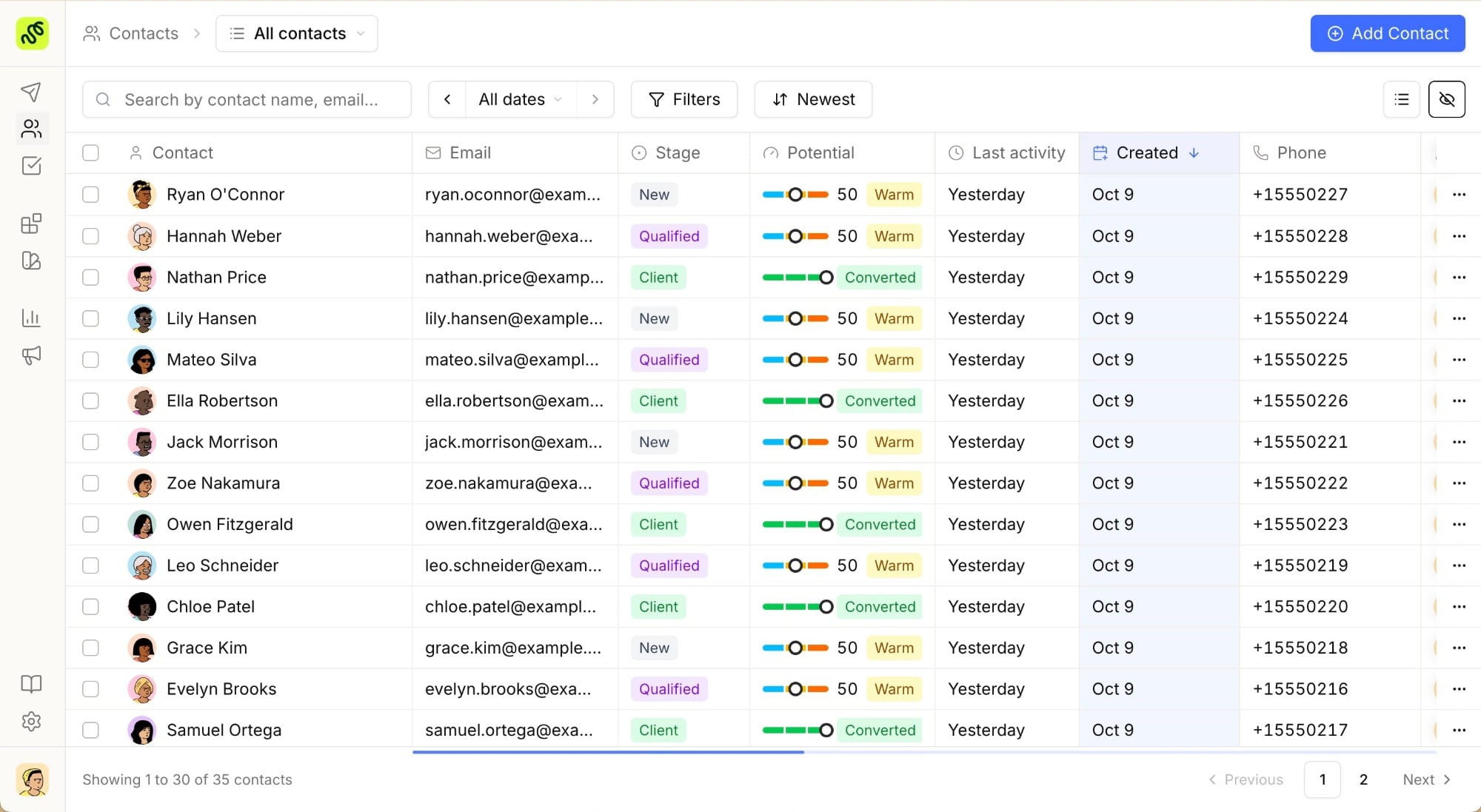
You cannot wait six years to know who is valuable. Watch the early signals instead: trip complexity, how they talk about future travel, whether they travel for milestones. A good travel CRM lets you tag those clients the day they inquire, so the ones with the highest likely lifetime value get your attention from the first email rather than the fifth trip.
Turn lifetime value into repeat bookings
A number on a spreadsheet changes nothing. Lifetime value only pays off when it drives what you do next.
Track the right numbers in one place
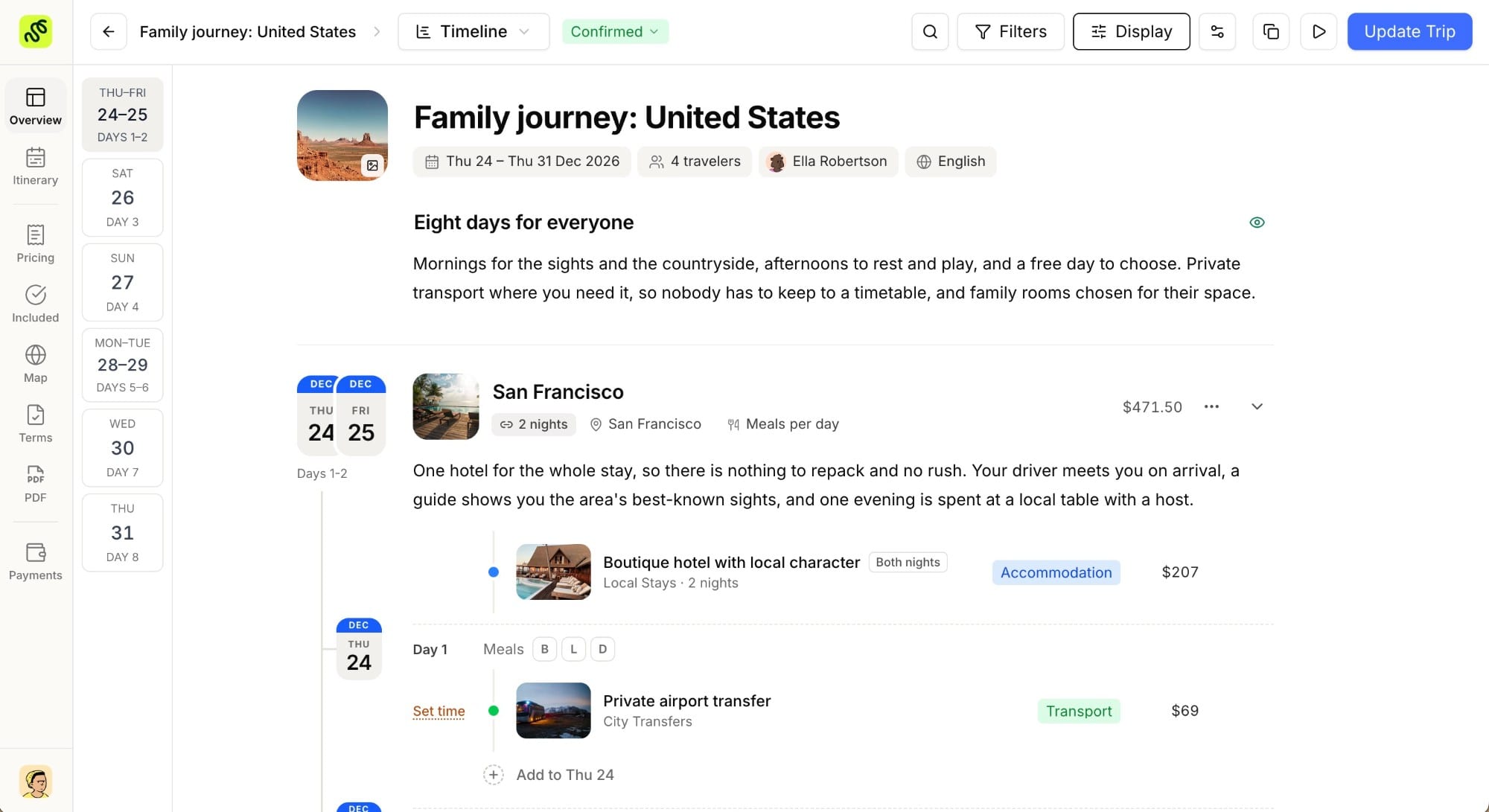
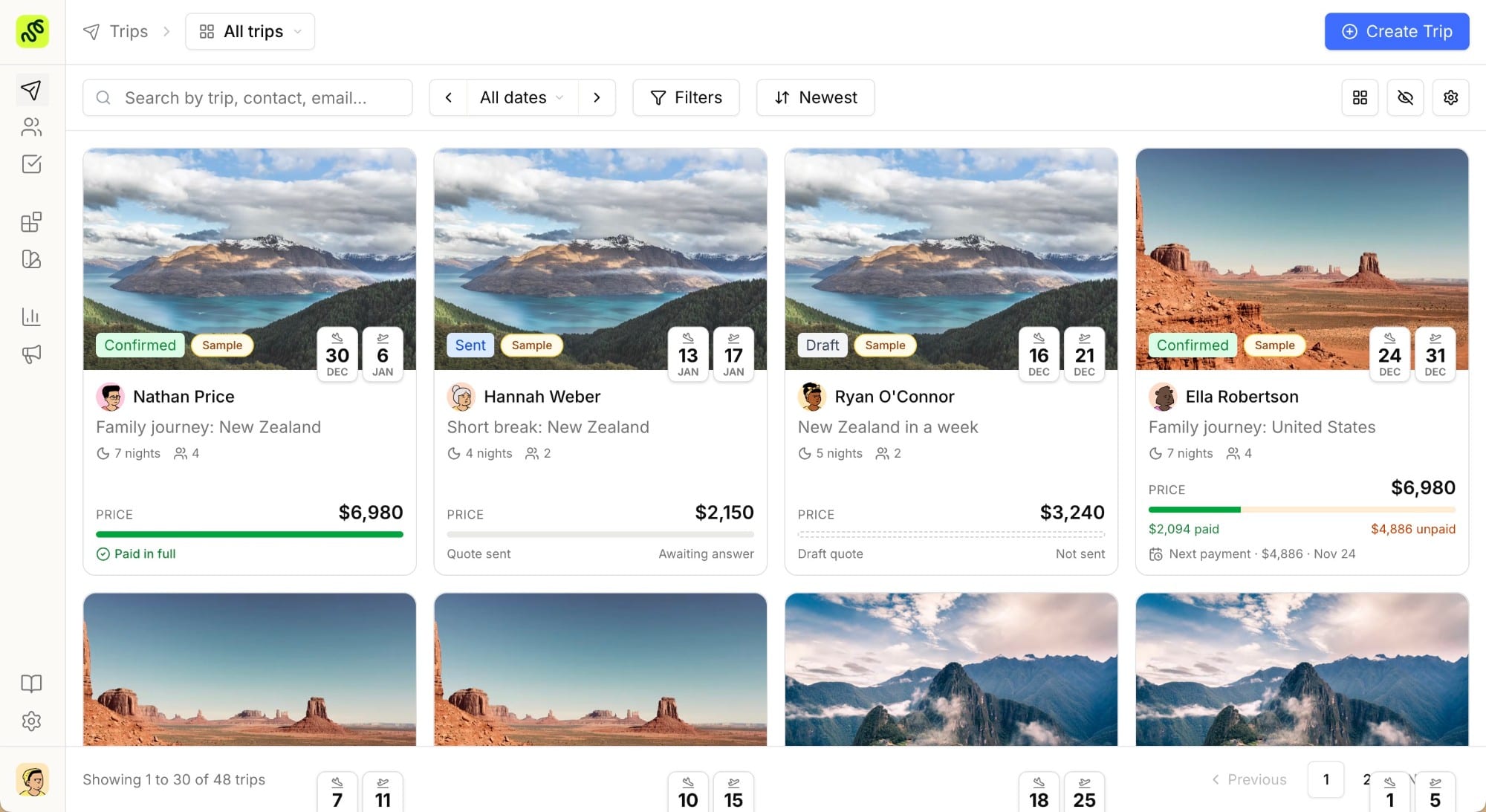
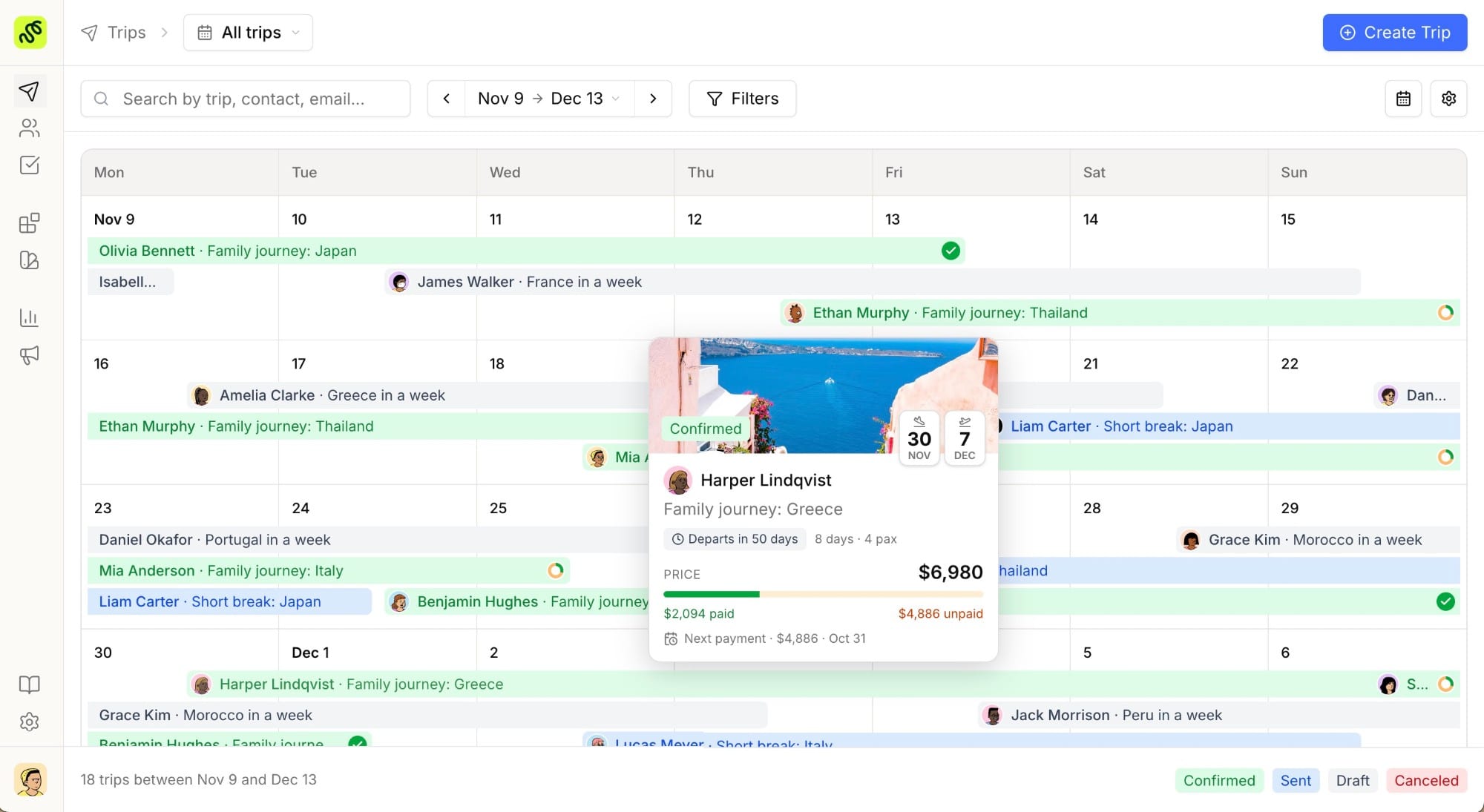
You cannot improve what you cannot see. Repeat-booking rate, average booking value, and revenue per client belong on a dashboard you actually look at, not buried in a folder of exports. This is the whole point of agency analytics: it turns the raw bookings in your CRM into the few numbers that predict next year, instead of describing last year. (For the wider metric set, see the rundown of travel agency KPIs.)
Time your follow-ups around the travel cycle
Lifetime value assumes clients come back, which only happens if you reach out at the right moment. Someone who booked an anniversary trip this spring is worth a note next winter, not a generic blast in between. Schedule re-engagement around each client’s own rhythm, and lifetime value stops being a theory.
Protect margin so CLV is real profit
Every discount you reflexively hand out shrinks the margin that lifetime value is built on. Before you shave a price to close a booking, remember you are not discounting one trip, you are discounting a decade. Charging for your time and holding your rates is what keeps lifetime value a profit number rather than a vanity one.
See what your repeat clients are really worth
Lifetime value is only as good as the records behind it. When your contacts, trips, and booking history sit in one workspace, the calculation stops being a spreadsheet chore and becomes something you can read off a dashboard. Try every feature free for 7 days and see what your best clients are actually worth across every trip they book.
Common questions
01How do you calculate customer lifetime value for a travel agency?
Multiply average booking value by trips per client per year by the number of years a client stays with you, then multiply by your gross margin. The result is lifetime profit per client. For a quick view, drop the margin step and you get lifetime revenue instead.
02Should travel agency CLV use revenue or profit?
Use profit for any decision about spending, such as how much to invest in acquiring or retaining a client, because it reflects what you keep after suppliers are paid. Revenue-based lifetime value is fine for ranking clients and explaining the concept to your team.
03What is a good customer lifetime value for a travel agency?
There is no universal benchmark, and anyone quoting one is guessing. The figure only means something next to your acquisition cost: if a client’s lifetime value comfortably exceeds what you spend to win and keep them, the model works. Track the ratio over time rather than chasing a headline number.
04How can a small agency increase client lifetime value?
Focus on the three levers you control: book clients more often with timed follow-ups, raise average booking value through thoughtful upsells, and protect margin by charging for your expertise. All three compound, and all three are easier to manage when your client history lives in one place.
Summarize this article with AI
Opens your assistant with the question already written.