The travel agency discovery call is the twenty minutes that decides whether you build a proposal someone actually books, or spend an afternoon designing a trip for a lead who was never going to say yes. When I ran a tour operation, it took me years to accept that the quote is rarely what wins the client. The conversation before it is. This guide is how to run a discovery call that uncovers what the traveler really wants, earns their trust, and sets up a proposal that closes, not a script, but a way of listening on purpose.
A travel agency discovery call is not a qualification screen
The first mistake is treating the call like an intake form read aloud. Qualification (do they have a real timeline, a budget in range, a trip you actually want to design) is a fast filter you can run before you ever pick up the phone. I cover that screen in detail in the travel agency sales pipeline guide, and most of it belongs on your inquiry form, not in a live conversation.
The discovery call comes after that filter. The lead is already worth your time. Now the job is different: understand the trip deeply enough to design something only you could have proposed. If you spend the call confirming dates and party size, you have learned nothing a form could not have told you, and the traveler leaves the call no more attached to you than when they arrived.
Prepare before you dial
A good call is mostly decided before it starts. Ten minutes of prep changes the whole tone:
- Re-read what you already know. Their form answers, the referral context, any earlier emails. Nothing signals “you are one of forty inquiries” faster than asking a question they already answered in writing.
- Protect the time. Block twenty to thirty minutes with no inbox, no other tabs. A discovery call you take between two other things sounds exactly like that.
- Set expectations when you book it. A one-line note (“we’ll spend about twenty minutes on what you’re looking for, then I’ll follow up with a tailored proposal”), frames the call as a consultation, not a quote-on-demand.
Why this matters: clients decide whether they trust your judgment in the first few minutes, largely on how prepared and unhurried you sound. Prep buys you both.
Open to build trust, not to sell
Resist the urge to pitch. The opening is for rapport and a shared agenda: remind them who referred them or what they inquired about, tell them how the call will go, and then get out of the way. A useful rule of thumb I still follow: spend far more time listening than talking. If you are speaking for more than a third of the call, you are selling, not discovering.
The traveler should do most of the talking because everything you need is in their words: the phrasing they use, the trip they keep circling back to, the thing they mention twice. You cannot design for that if you never stop to hear it.
Uncover the “why” behind the trip
This is the part of the travel agency discovery call that actually separates you from a booking engine. Amateurs ask where. Professionals ask why.
“Where do you want to go and when” gives you logistics. “When you picture this trip going perfectly, what are you doing?” gives you the trip. The second question pulls people out of spreadsheet mode and into what they are really buying: a balcony with a coffee and a quiet morning, a table of grandchildren who put their phones down, one week where nobody has to make a decision.
A few questions that consistently open people up:
- What’s the occasion? A milestone anniversary, a reset after a hard year, and a first big family reunion are three completely different trips, even to the same country.
- What would make this feel like a success: personally, not logistically? This separates the measurable (“flights on time, hotel as pictured”) from the meaningful (“we actually disconnected”).
- What went wrong on a trip you didn’t love? Past pain is the fastest route to what to protect them from: rushed pacing, a resort that felt like everyone else’s, a guide who read from a card.
Take notes in their language, not yours. When your proposal later echoes the exact phrase they used, it lands as “this person understood me,” which is worth more than any discount.
Talk about budget as value, not a hurdle
You confirmed the budget was in range during qualification. The call is where you talk about it like a professional: calmly, early, and without flinching. Most advisors lose money here by going quiet the moment numbers come up, then padding the proposal in the dark and hoping.
Instead, be direct about what a trip like the one they just described tends to cost, and about what your time is worth. If you charge a planning or design fee, this is where you introduce it, not as a toll, but as the reason the proposal will be built around them rather than pulled off a shelf. The travelers who value your expertise are relieved to hear you take it seriously. Whatever you do, do not turn the call into a pricing seminar: the mechanics of markups and net rates belong in your back office, not in a conversation about someone’s honeymoon.
Close with a single clear next step
End every discovery call the same way: play back what you heard in two or three sentences (“so this is a slower, food-led two weeks in Italy, celebrating your thirtieth, and the thing you most want is to not feel rushed”), confirm you got it right, and state exactly what happens next and when. “I’ll send a tailored proposal by Thursday” beats “I’ll be in touch” every time.
A vague ending is where warm leads go cold. A specific one (a named deliverable on a named day) keeps the momentum you just built and sets the follow-up expectation before you ever have to chase.
Turn the call into a proposal your CRM remembers
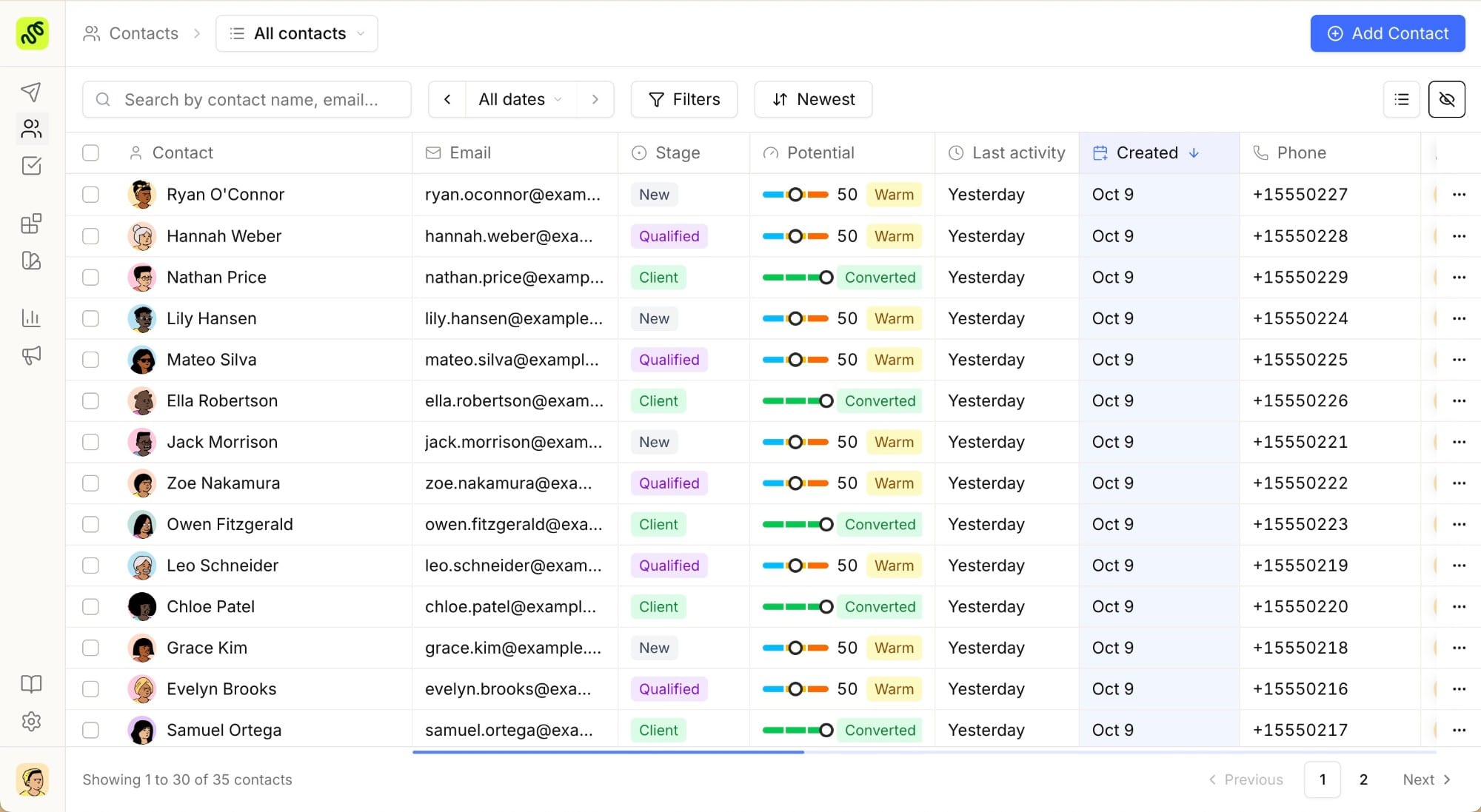
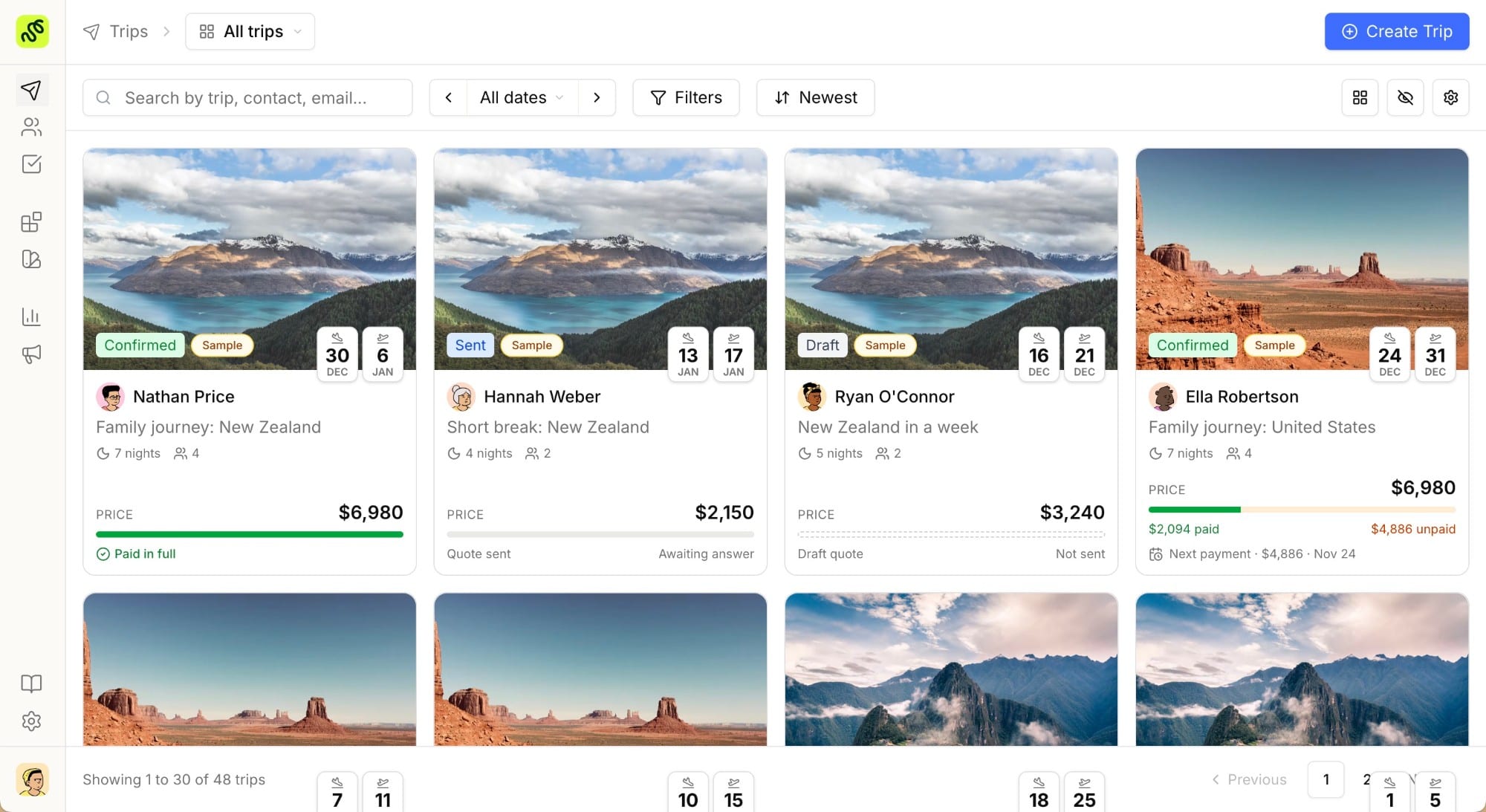
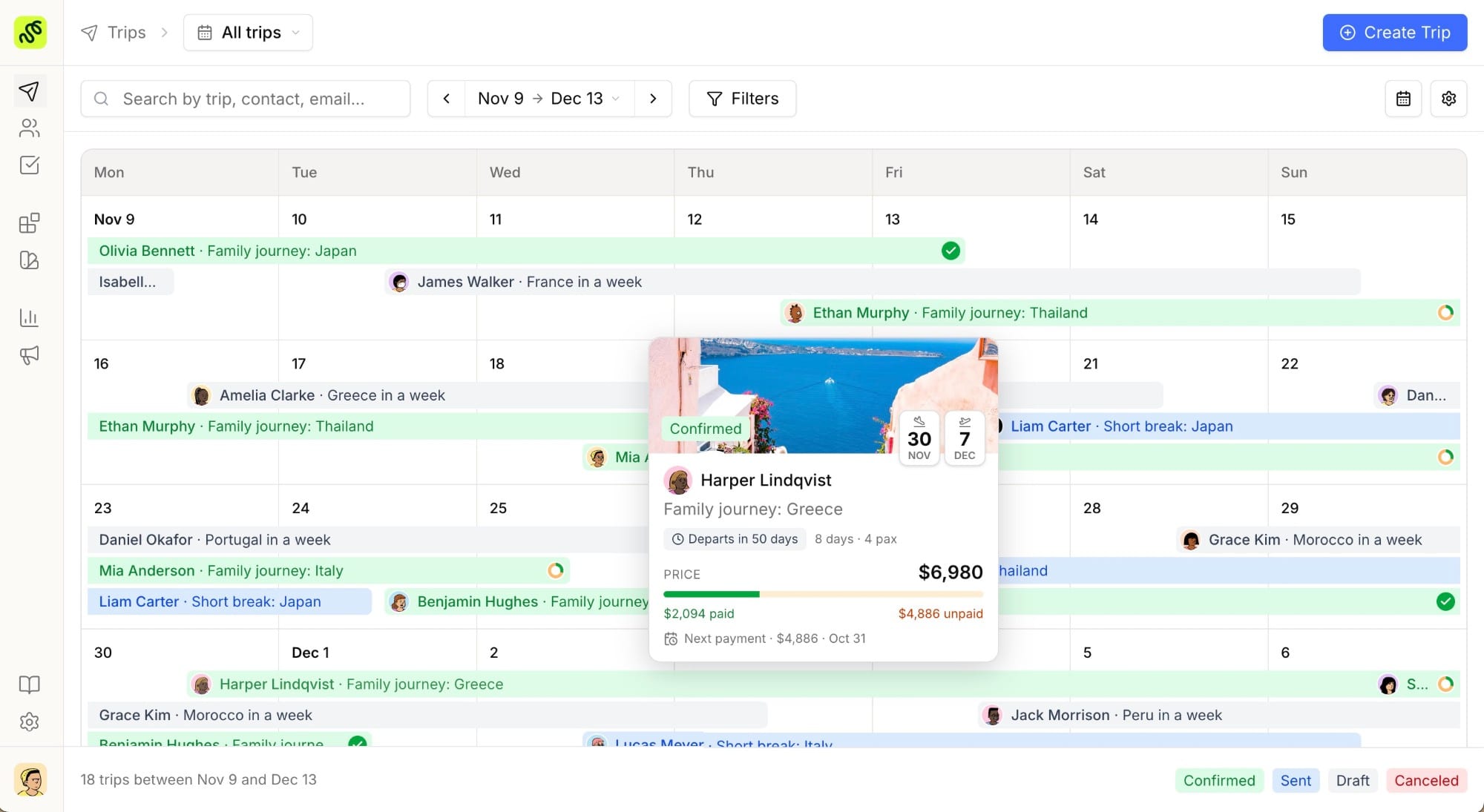
The best discovery call in the world is wasted if the details live in your memory or a sticky note. Everything the traveler told you (the occasion, the phrases, the past pain, the budget conversation) should be logged against their contact in a travel CRM, tied to the specific trip opportunity, with a follow-up task on the day you promised the proposal.
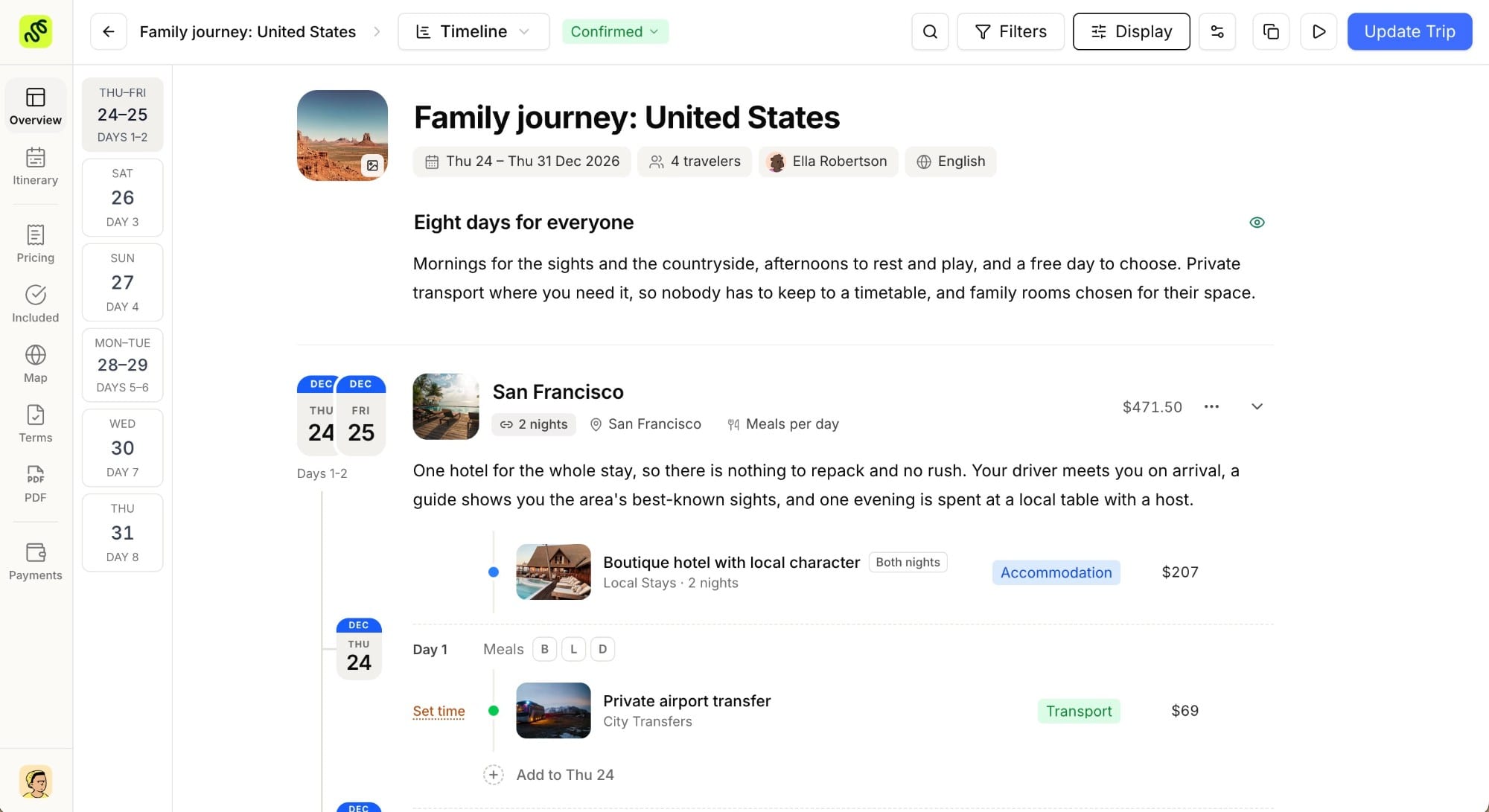
That is the whole point of designing in one place: the itinerary you build reflects the conversation because the conversation is right there next to it. TravelBuilderPro’s CRM keeps notes, opportunities, and tasks on the same contact, so the proposal practically writes its own brief, and when a colleague picks up the trip, or the client returns a year later, the context is still there.
Run the call to listen, capture what you hear, and let the proposal prove you were paying attention. That is how a twenty-minute conversation becomes a booking, and, more often than not, the client after that.
Keep every discovery call in one place
Ready to make every discovery call count? Try every feature free for 7 days and keep the whole conversation, contact, and itinerary in one place.
Common questions
01What is a travel agency discovery call?
A travel agency discovery call is a short consultation (usually twenty to thirty minutes by phone or video) held after a lead is qualified, to understand the trip they really want before you design a proposal. Its goal is not to gather logistics but to uncover the traveler’s motivation, priorities, and definition of a successful trip, and to build enough trust that your proposal is the one they book.
02How long should a discovery call be?
Twenty to thirty minutes is enough for most trips. Long enough to move past logistics into the “why,” short enough that it stays a focused conversation rather than free trip-planning. Block the time deliberately and give the traveler a clear sense of the agenda up front so it does not drift.
03What questions should I ask on a travel discovery call?
Ask about the occasion, what a successful trip would feel like personally, and what went wrong on a past trip they did not love, then let them talk. Open questions like “when you picture this trip going perfectly, what are you doing?” reveal far more than a checklist of destinations and dates. Save the hard qualifying questions (timeline, budget range, source) for your intake form so the call stays consultative.
04Should I charge for a travel consultation?
Many advisors introduce a planning or design fee, and the discovery call is the natural place to explain it: as the reason the proposal is built around the client, not pulled off a shelf. Travelers who value expertise rarely object; those who do were often going to be difficult regardless. Whether you charge is a business decision, but talking about money calmly and early always beats going silent and padding the quote later.
05How do I stop discovery calls from turning into free trip planning?
Set the agenda when you book the call, keep it to a set length, and end by promising a tailored proposal rather than answering every logistical question live. If someone wants a full itinerary designed on the call for free, that is a signal about how they will value your work throughout: a good reason to have a planning fee ready to introduce.
Summarize this article with AI
Opens your assistant with the question already written.