Every custom trip you sell rests on a stack of other people’s work: the hotels, transfers, guides, activity providers, wholesalers and local partners who actually deliver the days your client experiences. Travel agency supplier management is the unglamorous craft of keeping that stack organized, knowing who you can book, at what rate, on what terms, without digging through a year of email to find out. Get it right and your quotes go out faster and more accurately than your competitors’. Get it wrong and you rediscover an expired rate the hard way, in front of a client. After ten years running a tour operation, this is the system I wish I had built on day one.
A supplier is anyone you book, not just the hotels
When advisors say “supplier,” they usually picture hotels. In practice a supplier is anyone whose service ends up on the trip, and the list is longer than it first looks:
- Accommodation: hotels, lodges, riads, villas, the places you book direct and the ones you reach through a partner.
- Ground transport: transfer companies, private drivers, car hire, rail.
- Guides and local experts: the people who turn a sightseeing day into a story your client retells.
- Activities and experiences: cooking classes, boat days, tickets to the thing that has to be booked months ahead.
- Restaurants: for the dinners you reserve and build into the itinerary.
- Wholesalers and bedbanks: the aggregators that give you breadth and an instant rate across thousands of properties.
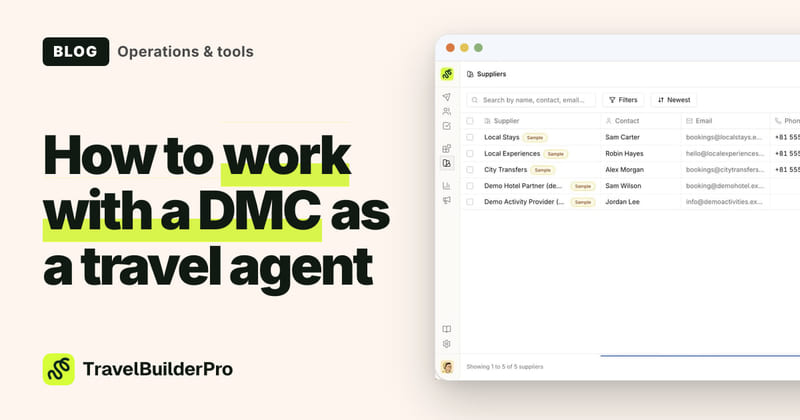
- Destination management companies: local operators who bundle many of the above into one costed ground programme.
Each type behaves differently. A direct hotel contract, a bedbank rate and a DMC quote are three ways to put the same client in the same bed, with different pricing, different flexibility and different work on your side. Managing suppliers well starts with seeing all of them as one network you curate, not as a pile of unrelated contacts.
What scattered supplier information actually costs you
Most small agencies do not have a supplier problem. They have a supplier memory problem. The rates exist, the contacts exist, but they live in a dozen inboxes, a shared drive nobody trusts, and one person’s head. That costs you in ways that are easy to miss until they bite:
- Slow quotes. Every proposal starts with a scavenger hunt for the current rate, so turnaround stretches and the fast competitor wins the booking.
- Wrong prices. You quote from a rate sheet that expired in April, then either eat the difference or go back to the client to raise the price. Both are bad.
- Lost leverage. The best contact at a supplier leaves, and because the relationship lived in one advisor’s email, it leaves with them.
- Missed deadlines. An allotment release date or a contract renewal slips past unnoticed, and you lose the inventory or the preferential rate you had earned.
- Invisible margin. When net costs sit in one place and client prices in another, you cannot see what a trip actually earns until it is over.
None of these is dramatic on its own. Together they are the quiet tax a disorganized supplier base charges on every single trip.
Build your supplier base deliberately
A good supplier base is curated, not collected. You do not need a contact for every hotel on earth. You need the right handful of reliable options in each destination you sell, sourced the smart way for each trip. There are three main routes, and the skill is choosing between them:
- Direct contracting makes sense once your volume in a destination justifies it. You negotiate a rate and terms straight with the property, often winning better pricing, exclusive allotment in peak season and friendlier cancellation terms. It is the most work and the most reward, so reserve it for the suppliers you book again and again.
- Wholesalers and bedbanks buy you breadth and speed. You get an instant, bookable rate across a huge catalogue without negotiating anything, which is ideal for one-off properties or destinations you sell rarely. The trade is a thinner margin and less flexibility.
- DMCs buy you local judgment and a safety net, not just a bed. When you are selling a destination you do not know intimately, a DMC contracts the ground programme and runs it for you. I wrote a full playbook on working with a DMC, because it deserves its own.
Most trips use a mix. A seasoned designer might contract two favourite hotels direct, pull a third from a bedbank, and lean on a DMC for the transfers and guiding. Managing suppliers deliberately means knowing, per trip, which route gives the client the best experience at the margin you need.
Record the same things for every supplier
Here is the single habit that separates a supplier base that works from a drawer of business cards: record the same fields for every supplier, every time. Consistency is what lets you compare two options in seconds instead of two hours. For each supplier, I keep:
- Who to contact: a primary name and a backup, because people move on and trips do not wait.
- The pricing basis: whether they quote you a net rate you mark up, or a commissionable retail rate. You cannot compare two suppliers until both are on the same basis.
- What is included and excluded: taxes, tips, meals, entrance fees. An “affordable” rate with three pages of exclusions is not affordable.
- Currency and validity: the currency they quote in, the dates the rate holds, and the seasonal variations.
- Inventory terms: any allotment you hold and, crucially, its release deadline.
- Cancellation and payment terms: the deposit, the cancellation ladder, and when the balance is due. These flow straight into the terms you set with your client.
- How they actually perform: a short, honest note after each trip. The supplier who answered a hard question well at 2am is worth more than the one who was a euro cheaper.
Write it down once, in a form every quote can pull from, and you stop re-learning the same facts on every proposal.
Travel agency supplier management is mostly maintenance
A supplier base is only as good as its freshness. Rates expire, seasons turn, allotments release, and the moment one record goes stale the whole system starts quoting fiction. Keeping it current is a small, repeatable discipline:
- Set renewal reminders against contract end dates, so you renegotiate before the rate lapses rather than after a client has seen the wrong price.
- Review before each high season, when most suppliers reprice. A one-afternoon refresh beats a dozen surprises during your busiest weeks.
- Watch allotment release dates so you give inventory back on your terms, not by forgetting it.
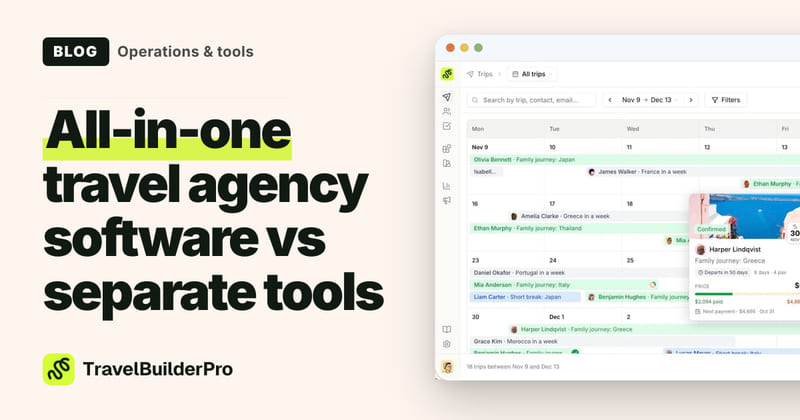
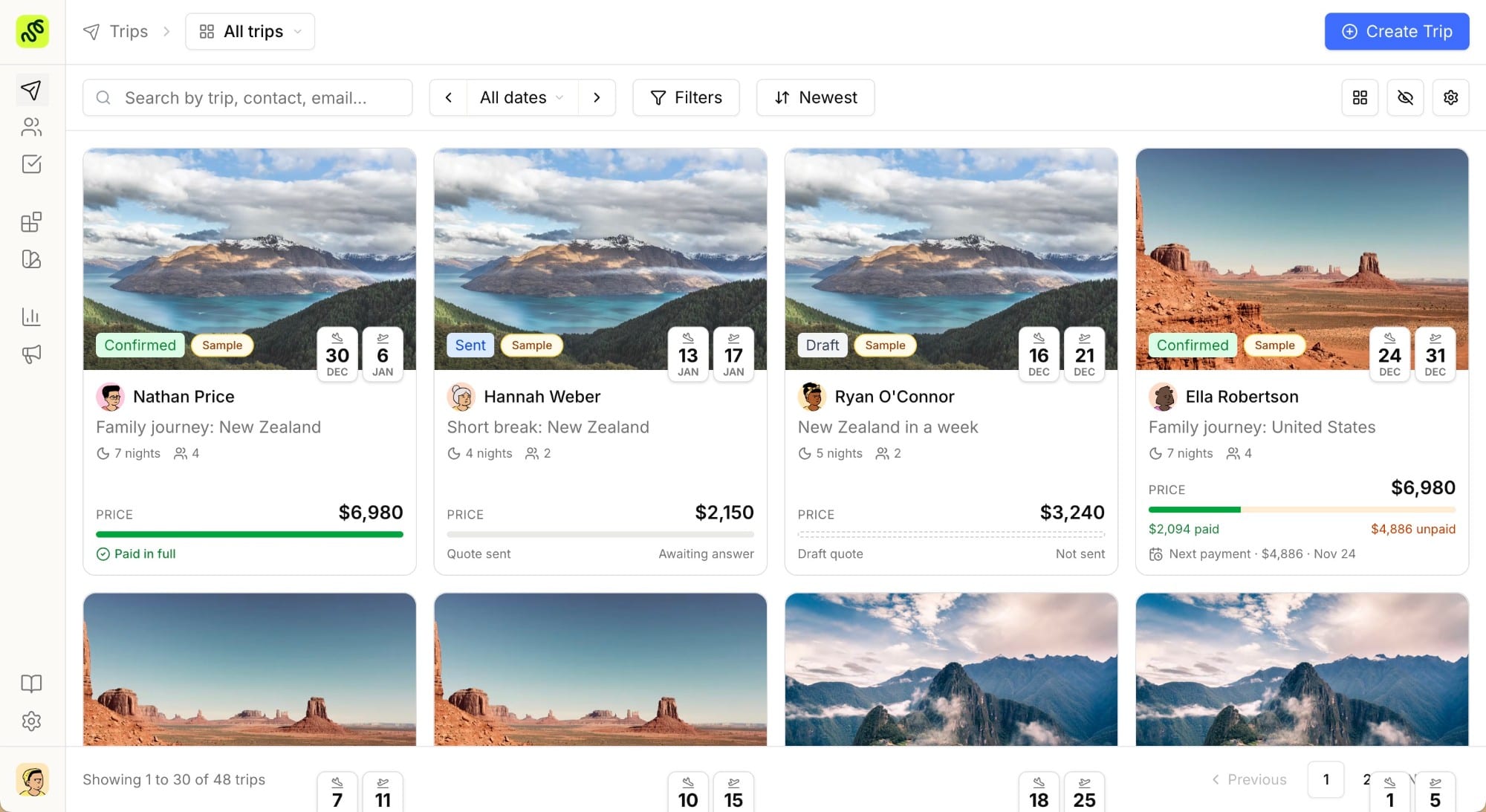
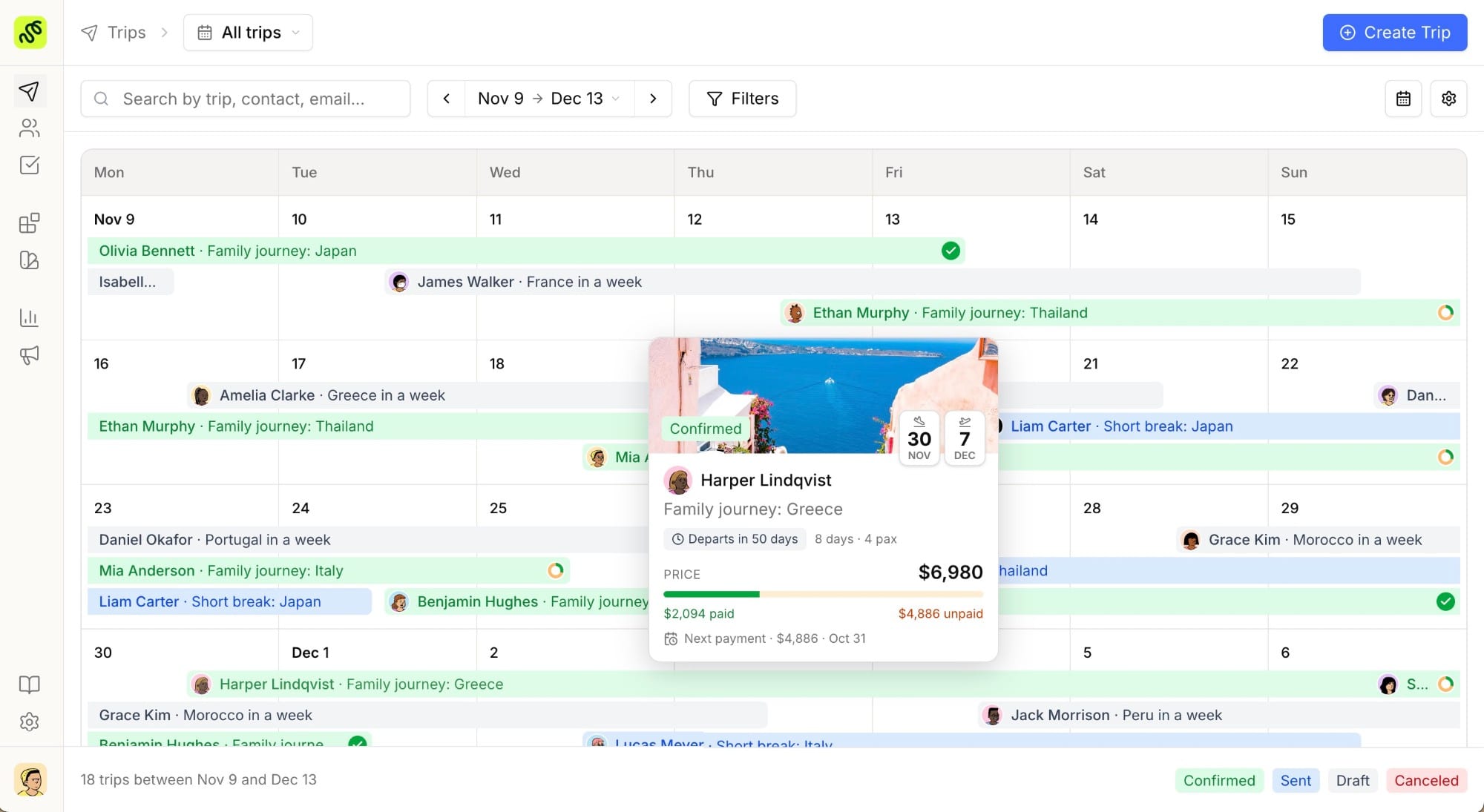
- Keep one source of truth. If every quote pulls supplier rates from the same place your team maintains, nobody can quote from a dead spreadsheet. This is exactly what the operations workspace is for: suppliers, rates and trips that stay in step instead of drifting apart.
The goal is simple. When you open a supplier record, you should be able to trust it without checking it.
Turn a tidy supplier base into faster itineraries and visible margin
All of this effort pays off at the two moments that matter most: when you build the trip and when you count what it earned.
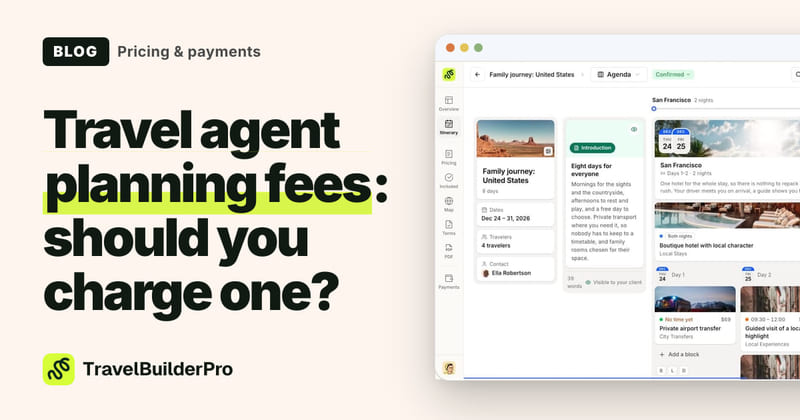
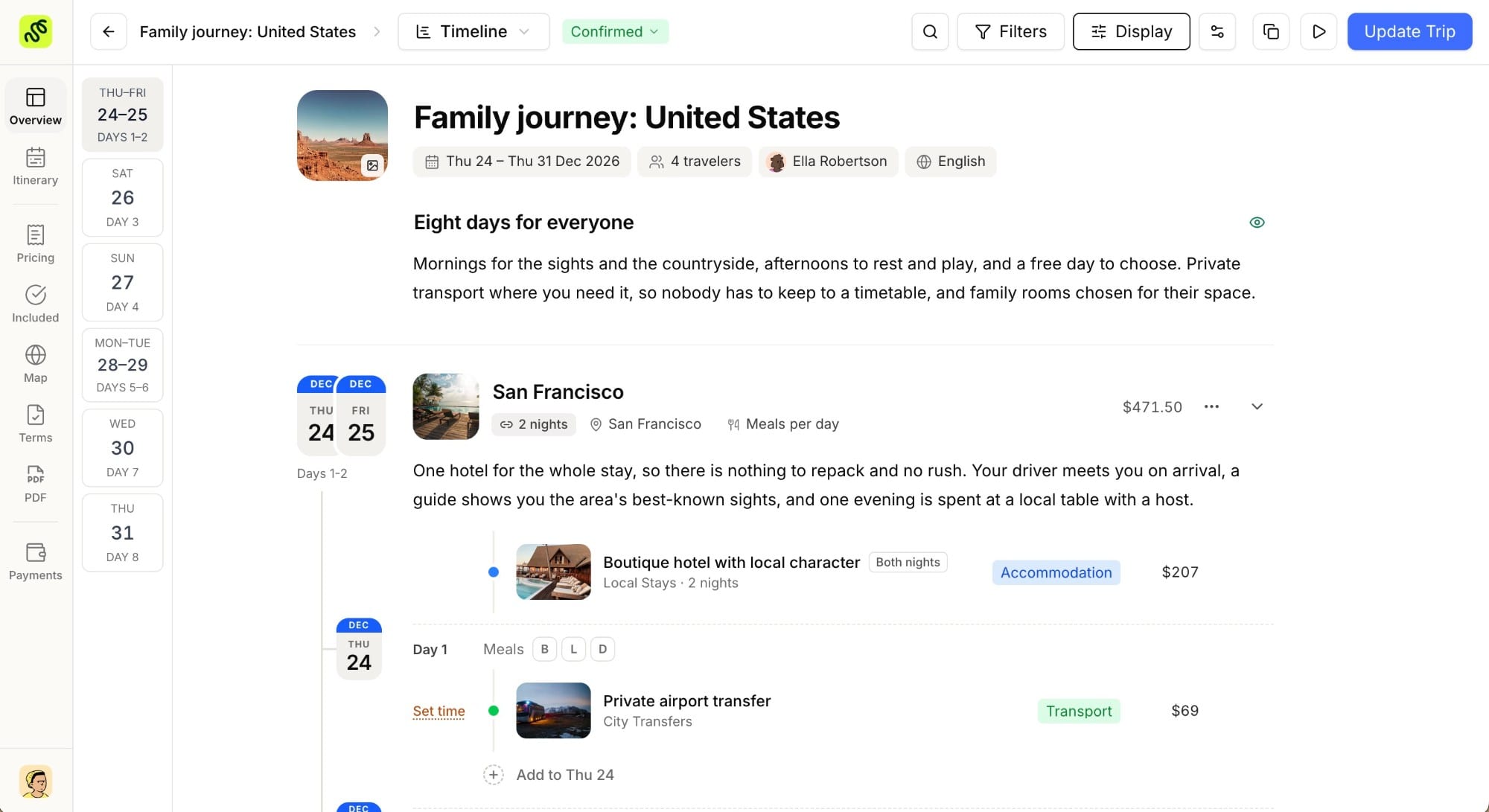
When suppliers and their rates live beside your trips, building an itinerary stops being research and becomes assembly. You drop in known-good blocks, a contracted hotel here, a trusted guide there, each one already carrying its rate and terms, and a proposal that used to take a day takes an hour. Reuse compounds: the second trip to a destination is far faster than the first, because the supplier work is already done.
And because the net cost and the client price sit together, your margin is visible on every quote instead of being a number you reconstruct at year end. You see, trip by trip, which suppliers and which destinations actually make you money, and you can lean into them deliberately. A curated, current, well-recorded supplier base is not back-office housekeeping. It is the quiet engine under faster quotes, cleaner margins and a business you can hand off to a team without it falling apart.
Keep suppliers, rates and trips together
TravelBuilderPro keeps your suppliers, their rates and your trips in one place: record a supplier once, build it straight into a branded itinerary, and see your margin on every quote, with a 7-day full-feature trial when you sign up. Try every feature free for 7 days.
Common questions
01What is supplier management for a travel agency?
Supplier management is how an agency builds, records and maintains the network of hotels, transport companies, guides, activity providers, wholesalers and DMCs it books trips through. In practice it means keeping each supplier’s contact, rate, terms, inventory and performance in one trustworthy place, so every quote is fast and accurate and no rate, deadline or relationship gets lost.
02How many suppliers should a small agency work with?
Fewer than you think, chosen well. For each destination you sell regularly, a small handful of reliable options is usually enough: one or two accommodations you trust, a dependable transfer company, a good guide, and a route to the rest through a wholesaler or a DMC. Depth of relationship beats breadth of contact list, because volume with a few suppliers earns you better rates and better service.
03Should I book direct, through a wholesaler, or through a DMC?
It depends on the trip. Book direct when your volume justifies the work and you want the best rate and terms on a supplier you use often. Use a wholesaler or bedbank for breadth, speed and one-off properties. Use a DMC when you need local judgment, contracted ground logistics and a safety net in a destination you do not know intimately. Most trips combine all three.
04How do I keep supplier rates from going out of date?
Set reminders against every contract and rate validity date, review your base before each high season when suppliers reprice, and keep a single source of truth that every quote pulls from. The failure mode is a stale rate living in someone’s inbox while the team quotes from it. One maintained record removes that risk.
05Do I need software for supplier management, or is a spreadsheet enough?
A spreadsheet works until two people need to use it at once, a rate changes and only one copy gets updated, or you want your supplier costs to connect to the trips and margins they feed. At that point a workspace that keeps suppliers, rates and itineraries together saves far more time than it costs, and it removes the quoting-from-a-dead-rate problem for good.
Summarize this article with AI
Opens your assistant with the question already written.