FIT itinerary work is where independent travel designers make their real money, and where a generic proposal loses the sale fastest. A FIT itinerary is a custom trip built end-to-end for one traveler or party, not lifted from a package template, and a demanding traveler can tell the difference within the first three minutes of reading a proposal. If you’ve ever spent six hours building a bespoke itinerary and lost the client to something “cheaper but blander,” the itinerary probably wasn’t the problem: the process behind it was. Here’s how I build a FIT itinerary that reads as considered rather than assembled, based on ten years running trips before I built software for it.
What makes a FIT itinerary different from a packaged one
A FIT (Fully Independent Traveler), trip is priced, sequenced, and written for one party, not sold off a shelf to forty people on a coach. That single fact changes almost everything about how you should build it. A GIT (Group Inclusive Tour) itinerary is finished once; you sell the same document dozens of times. A FIT itinerary is finished once and sold exactly once, which means every hour you spend on it has to be justified by that one booking.
This is also why FIT work carries the highest margin and the longest sales cycle in the business. The traveler is comparing your proposal against at least one other designer’s, often silently, and they’re judging craft as much as itinerary. A rushed FIT itinerary (templated hotels, generic day descriptions, inconsistent formatting) reads as a rushed relationship, and demanding travelers who are paying a premium for a custom trip notice that immediately.
Start with the traveler’s non-negotiables, not a template
The biggest time-waster in FIT design is building before you’ve actually listened. I used to open a blank itinerary the same day as the discovery call, eager to show momentum, and I’d rebuild half of it a week later because I’d guessed wrong on what mattered to the client. Now the first draft doesn’t start until I can answer three questions without guessing:
- What can’t move? A fixed anniversary date, a specific hotel they’ve seen on Instagram, a non-negotiable activity. Lock these first; everything else gets built around them.
- What’s the actual budget shape? Not just a total, but where they want to spend more (one splurge night) versus where they’re happy to save (a transfer day). Guessing this wrong produces a proposal that’s either insultingly modest or needlessly expensive.
- What’s the pace they actually want? “Relaxed” means something different to a couple in their 60s than to two friends in their 30s, and building the wrong pace into a FIT itinerary is one of the fastest ways to lose credibility even when every hotel choice is right.
A 20-minute discovery call that nails these three questions saves hours later. Skipping it to “just start building something to show them” is the single most common reason FIT proposals get reworked from scratch.
Build the itinerary in three passes: skeleton, detail, story
Trying to write a finished, polished FIT itinerary in one sitting is how designers burn a full day on a proposal that might not close. I build in three passes instead, each with a different job.
- Skeleton pass. Day-by-day structure only: city, base hotel, one anchor activity per day, transfer days flagged. No prose, no photos. This is where you catch a pacing mistake (three consecutive early-morning departures, or a full free day with nothing planned that the client didn’t actually ask for), before you’ve invested real time in the details.
- Detail pass. Fill in the specifics: exact hotel room category, confirmed activity times, transfer durations, meal inclusions. This is also where you check feasibility. Does the timing between the morning activity and the afternoon transfer actually work, or does the skeleton look fine on paper but fall apart once real durations are added.
- Story pass. This is the pass that actually sells. Rewrite the generic day descriptions into something that reflects the traveler’s stated interests from the discovery call. The food-focused couple gets language about the market visit and the chef’s table, not a copy-pasted hotel blurb. This pass is short, usually under an hour for a ten-day trip, but it’s the difference between a FIT itinerary that reads as personal and one that reads as a template with names swapped in.
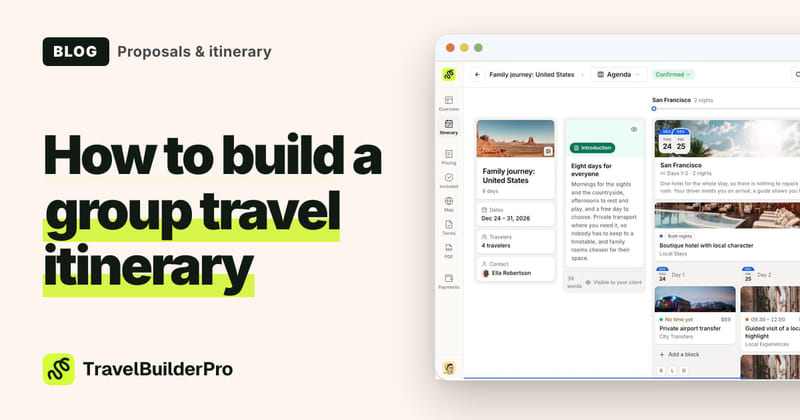
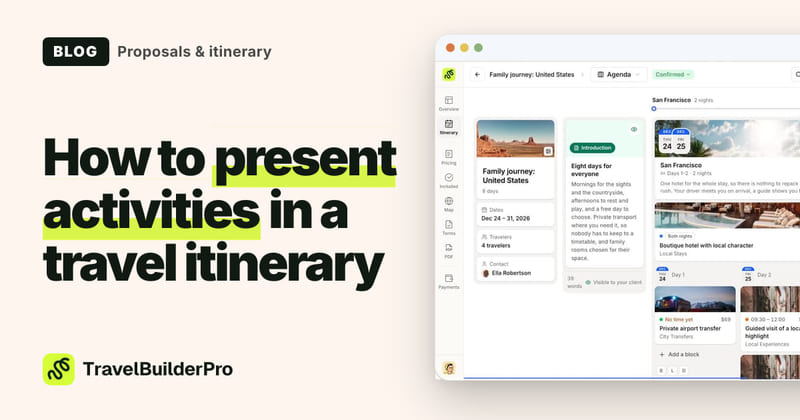
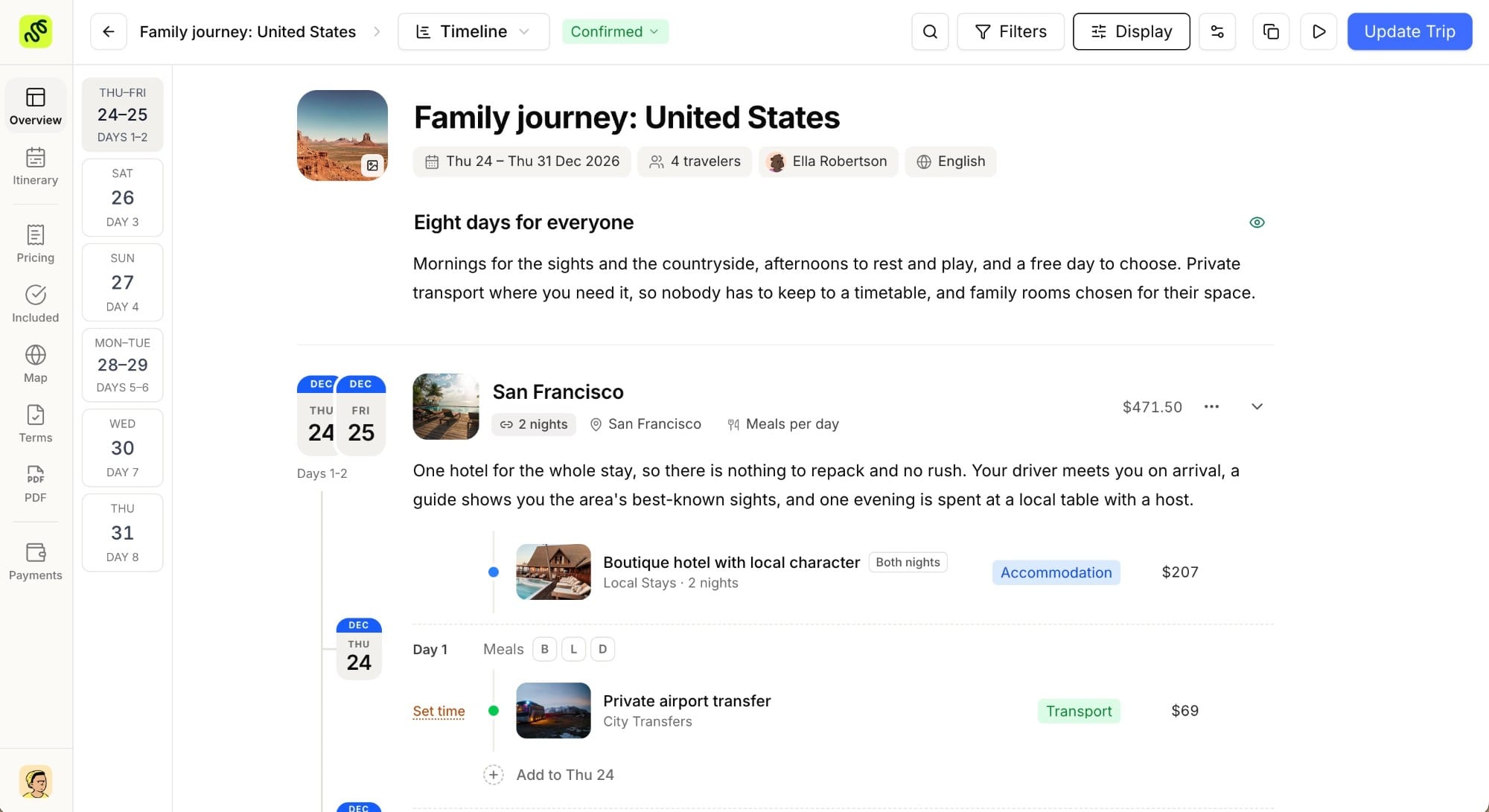
Doing these as three separate passes (instead of trying to perfect each day before moving to the next) is what makes FIT design fast enough to stay profitable. A live itinerary builder helps here too: you can run the skeleton and detail passes directly in the tool the client will eventually see, instead of drafting in a separate document and re-formatting into a proposal later.
Keep multi-supplier logistics airtight
A packaged GIT tour has already had its logistics tested by however many groups ran it before yours. A FIT itinerary hasn’t: you’re often combining suppliers, guides, and transfers that have never been sequenced together before, for this specific traveler. Three habits keep this from becoming a liability:
- Build in real buffer time, not the minimum theoretical connection. A flight landing at 2pm with a 2:15pm transfer booked looks efficient on paper and turns into a missed connection the one time the flight is 25 minutes late.
- Confirm availability before you present, not after they say yes. Nothing damages trust faster than a beautifully designed itinerary where the signature hotel turns out to be sold out once the client is ready to book.
- Name the handoffs. A private guide meeting the client at arrivals, a local partner confirming a same-day activity. Write these into the itinerary explicitly so the traveler (and you) know exactly who is responsible for what, and when.
None of this is unique to FIT work, but it matters more here because there’s no prior group’s experience to catch a logistics gap before the client does.
Price for FIT margin, not GIT volume
FIT itineraries should carry a meaningfully higher markup than group product, and new designers frequently under-price them out of habit: pricing a custom ten-day trip the way they’d price a seat on a scheduled departure. The reasoning is simple: a GIT seat spreads your design and sales effort across every traveler who books it; a FIT itinerary concentrates hours of discovery calls, three-pass design work, and supplier coordination into a single booking. If your markup doesn’t reflect that concentration of effort, you’re effectively subsidizing your best clients with your own time.
This isn’t about padding numbers: it’s about pricing the craft you’re actually delivering. A useful gut check: if a FIT proposal takes noticeably longer to build than your average package, its markup should be noticeably higher too, not identical.
Common FIT itinerary mistakes that cost the sale
A few patterns show up again and again in proposals that don’t close, even when the destination and hotel choices were genuinely good:
- Presenting the skeleton as if it were finished. Sending a proposal with generic day titles and no narrative because “the details are what matters”: they aren’t, not to a client deciding between two designers on craft.
- Ignoring a stated non-negotiable “because there’s a better option.” Even a well-intentioned substitution reads as not having listened, and FIT clients are paying specifically to be listened to.
- Underestimating how long revisions take once trust is shaky. A client who senses the itinerary wasn’t built around their actual priorities will ask for more changes, not fewer: a well-run discovery call up front avoids that spiral entirely.
- Sending the itinerary as a static document with no easy way to track questions or comments. A proposal that’s clear about what’s included, what isn’t, and how to respond closes faster than one that leaves the client guessing. Our proposal checklist covers the fundamentals worth double-checking before you send.
Try every feature free for 7 days
Build your next FIT itinerary in a tool designed for bespoke, one-off trips, not a package builder repurposed for custom work. Start free: full access for 7 days, cancel any time before it ends.
Common questions
01How long should it take to build a FIT itinerary?
For a ten-day trip, plan on roughly half a day of focused work split across the three passes (skeleton, detail, story), once the discovery call has already answered the traveler’s non-negotiables, budget shape, and pace. Skipping discovery to save time upfront almost always costs more time later in rework.
02How is a FIT itinerary different from a template-based proposal?
A template starts from a pre-built trip and swaps in a name and some dates. A FIT itinerary starts from the traveler’s stated preferences and is sequenced, priced, and written specifically for them: including the narrative pass that ties activities back to what they actually said they wanted.
03Should FIT itineraries be priced differently than group tours?
Yes. FIT work concentrates far more discovery, design, and coordination time into a single booking than a GIT seat sold to many travelers, so the markup should reflect that concentration rather than mirroring group pricing.
04What tools actually help with building FIT itineraries faster?
A dedicated itinerary builder that lets you draft the skeleton and detail passes directly in the client-facing format (rather than a separate document you reformat later) is the single biggest time saver. Pair it with a clear intake process so the discovery-call answers don’t get lost before the design work starts.
Summarize this article with AI
Opens your assistant with the question already written.