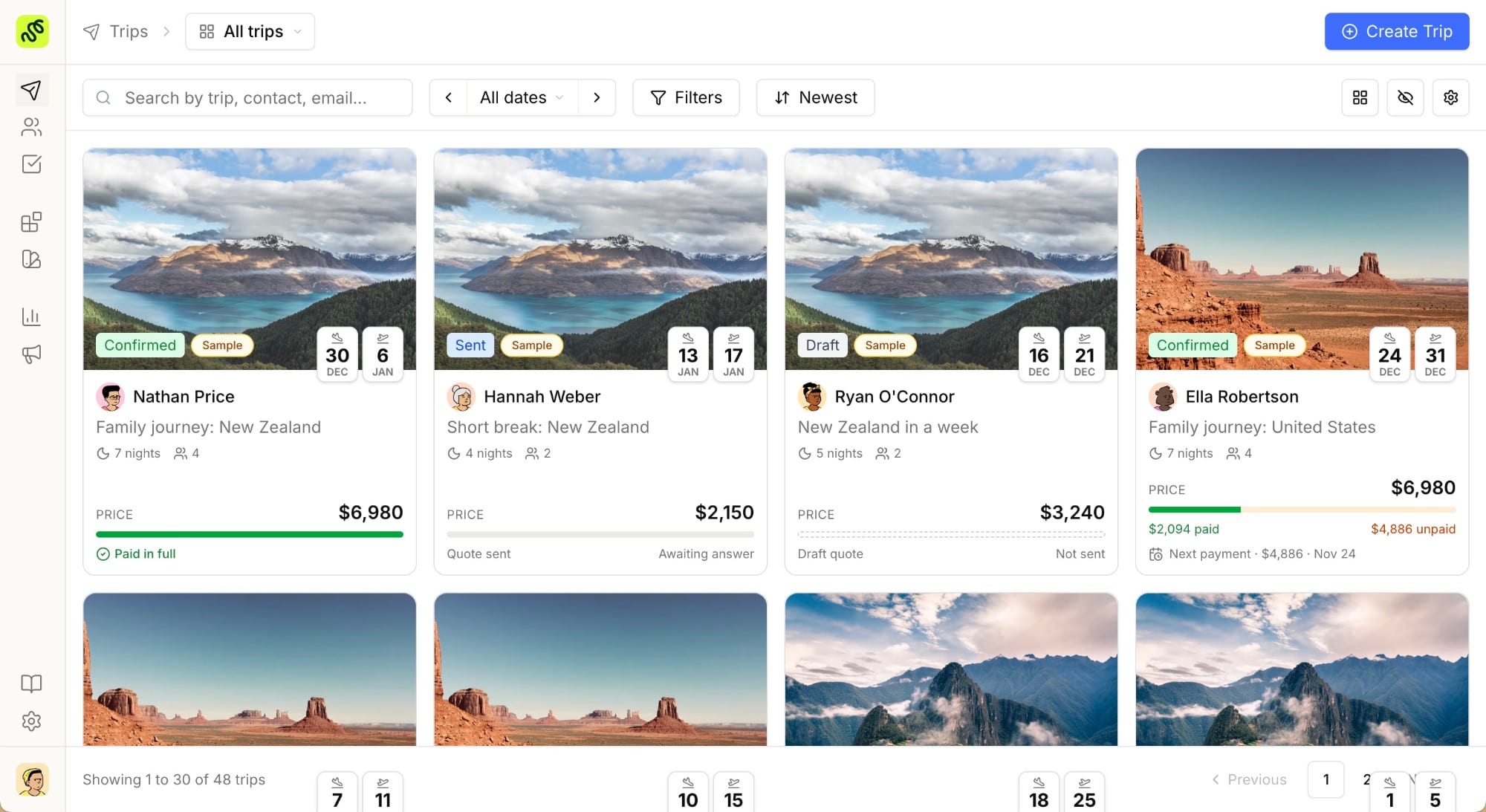
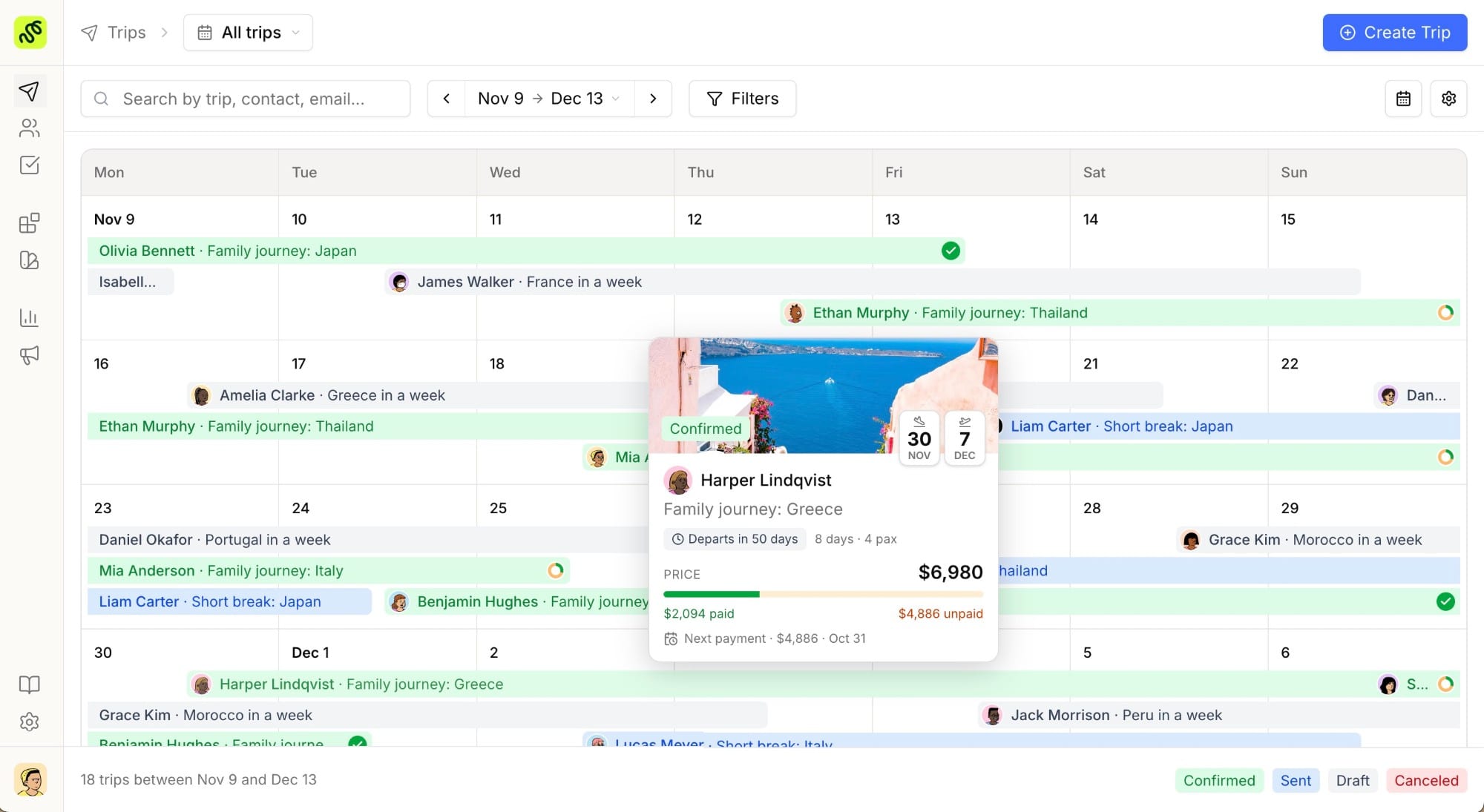
To present activities in a travel itinerary well, show each experience the way the client lives the day: name the activity and say plainly what it is, give the start time and how long it runs, state what the price includes and what costs extra, note the effort and access it demands, and add one honest photo, laid out in the order the day unfolds. After a decade running trips as a tour operator, I learned that the hotels are where a client falls for the trip and the activities are where they decide it was worth the money. Here is how I lay the experiences out so they sell the day and answer the questions before they are asked.
Why activities are where the day comes alive
A client can picture a room before they arrive. They cannot picture a guided walk through a medina, a dawn balloon flight, or a cooking class in someone’s home until you put it in front of them. So the activities are where the trip stops being a list of places and starts being days they want to live. Get them right and the proposal reads as a trip designed for this person. Get them wrong, a bare line that says full-day excursion, and the most memorable part of the trip reads as filler.
Activities are also where the money often sits. A private guide, a helicopter transfer, a chef’s table: these are the lines that lift a trip from a package into something bespoke, and they are the lines a client scrutinises hardest, because they can feel the price. Present them with care and you are not padding the day. You are showing the client exactly what they are paying for.
What to show for every activity
The goal is enough for the client to feel the experience and trust that you have thought it through, not an operator’s worksheet. For each activity, give them these.
Name it and say what it actually is
Name the experience, then, in one honest line, say what it really involves. Guided old-town walk tells the client almost nothing. A three-hour morning walk through the old town with a local historian, ending at the covered market tells them the length, the guide, the route, and the payoff. Clients do not book labels, they book the thing the label stands for, so describe the thing. If an activity is more demanding or more niche than it sounds, say so here rather than letting the client discover it on the day.
Timing, duration, and where it sits in the day
Give the start time, how long the activity runs, and what it leaves around it. A client reading cooking class has no idea whether it eats their whole afternoon or an hour before dinner. State it: 10:00, about three hours, back at the hotel by early afternoon. Timing is also how you show pacing, proof that you have not stacked three demanding mornings in a row, which matters as much to the trip as the activities themselves. This is where the day-by-day structure of the itinerary and the individual experiences meet.
What the price includes, and what does not
The single most common activity complaint is the cost that was not mentioned. State what the price covers: guide, entrance fees, transport, meals, equipment. Then name what it does not: the tip, the drinks, the cable-car ticket bought on site, the optional extension. A client who knows a line costs extra before they travel treats it as a choice. A client who meets it as a surprise at the ticket window treats it as something you hid. One honest line in the proposal is cheaper than one bad review.
Effort, access, and who it suits
Say what the activity demands of the body: how much walking, on what terrain, at what altitude, in what heat, with how early a start. A couple in their seventies and a family with a six-year-old read the same hike to the viewpoint very differently, and the gap is where a day goes wrong. Note accessibility honestly too: steps, uneven ground, long stretches without shade or a toilet. Matching the effort to the traveller is exactly the destination knowledge a client is paying a designer for.
Sell the experience without burying the logistics
An activity entry has two jobs: make the client want the day, and tell them how it works. Most proposals do one or the other. Good ones do both, in that order.
Lead with what they will feel, not the schedule
Open each activity on the experience, then follow with the practical detail. Watch the sun come up over the temples from a hot-air balloon, drifting low over the plain before the heat of the day sells the morning. 06:00 pickup, roughly one hour aloft, breakfast on landing runs it. Put the feeling first and the logistics underneath, and the client reads a reason before they read a schedule. That first line is its own craft, and it is worth writing descriptions that sell the experience rather than ones that only list what happens.
One image that matches the words
One strong, representative photo per headline activity beats a wall of thumbnails. Choose the shot that matches what you sold: if you promised the view from the summit, show the view, not the car park at the trailhead. Avoid the generic stock image that could be any country: the client can tell, and the gap between the glossy picture and the real morning is where disappointment starts. A good itinerary builder keeps a photo and short description attached to each experience, so you are not rebuilding the day on every proposal.
Keep the practical line close
The experience copy sells, but the client still needs the facts near it. Dress code, what to bring, whether lunch is included, how fit they need to be: keep those beside the activity they belong to. A beautiful paragraph with the logistics three screens away forces the client to hunt, and a client who has to hunt starts to doubt.
Where an activity needs a choice
Options can lift a day or stall it, exactly as they do with hotels. The difference is knowing where the client wants to choose and where they want you to decide.
Fixed days and free days
Not every day should be programmed. A trip with an activity booked into every slot reads as exhausting before it starts, and it leaves no room for the client’s own wandering. Mark the free time as a deliberate choice, morning at leisure, options nearby on request, rather than a gap you forgot to fill. The contrast between anchored days and open ones is part of what makes the planned activities feel special.
Offer options the way you would offer rooms
Where a day genuinely splits, the cultural morning or the active one, the wine region or the coast, present two or three clear options rather than a menu. This is the same logic as a tiered proposal applied to a single day, and it works for the same reason: it moves the client from “do I want this?” to “which one?”. Give each option a one-line reason to choose it, and let the client pick with their own eyes.
Price the optional extras honestly
When an activity is optional or an upgrade, show what it adds, per person or for the group, right next to it. The private guide instead of the group tour, the helicopter transfer instead of the road, the chef’s table add-on: name the difference in price and let it sell itself. Burying the cost of an upgrade, or making the client ask for it, reads as a sales trick and spends the trust the rest of the proposal earned.
Booking status, suppliers, and the things that go wrong
A beautifully written activity means nothing if the slot quietly sells out before the client pays, or if the guide you promised is double-booked. The operational layer is where good presentation holds up or falls apart.
Confirmed, on request, or to be booked
Give every activity an honest status, the same way you would a hotel. Confirmed means the slot is held in the client’s name. On request means you have asked the supplier and are waiting. To be booked means nothing is held and the price or availability can still move. Clients accept provisional, what they do not forgive is believing a sought-after experience was theirs when it was never held. Say subject to availability plainly where it applies, so a limited activity becomes a reason to decide now rather than a surprise later.
Keep the activity suppliers in one place
Behind every experience sits a supplier: a guide, a local operator, a DMC, a venue. Each has its own lead time, cut-off, and rate that expires. When you keep those suppliers, rates, and availability in one operations view, the cut-offs stop living in your inbox. You can tell the client how long a price holds and how late they can still add the cooking class, because you can see the supplier’s deadline instead of guessing at it.
Meeting points and the day-of details
The detail clients panic about on the morning itself is where to be and when. For each activity that needs it, give the meeting point, the pickup time and place, and a local contact or what to do if something slips. A private transfer that says only guide will meet you sends a client to the wrong hotel lobby at 7am. One clear line, your guide meets you in the lobby at 08:45; if not, call the number on your trip page, turns a possible panic into a non-event.
Where to present activities in a travel itinerary
An activity written this carefully deserves a place in the proposal that keeps it readable, and keeps it true as the trip firms up.
On the day, in the order it happens
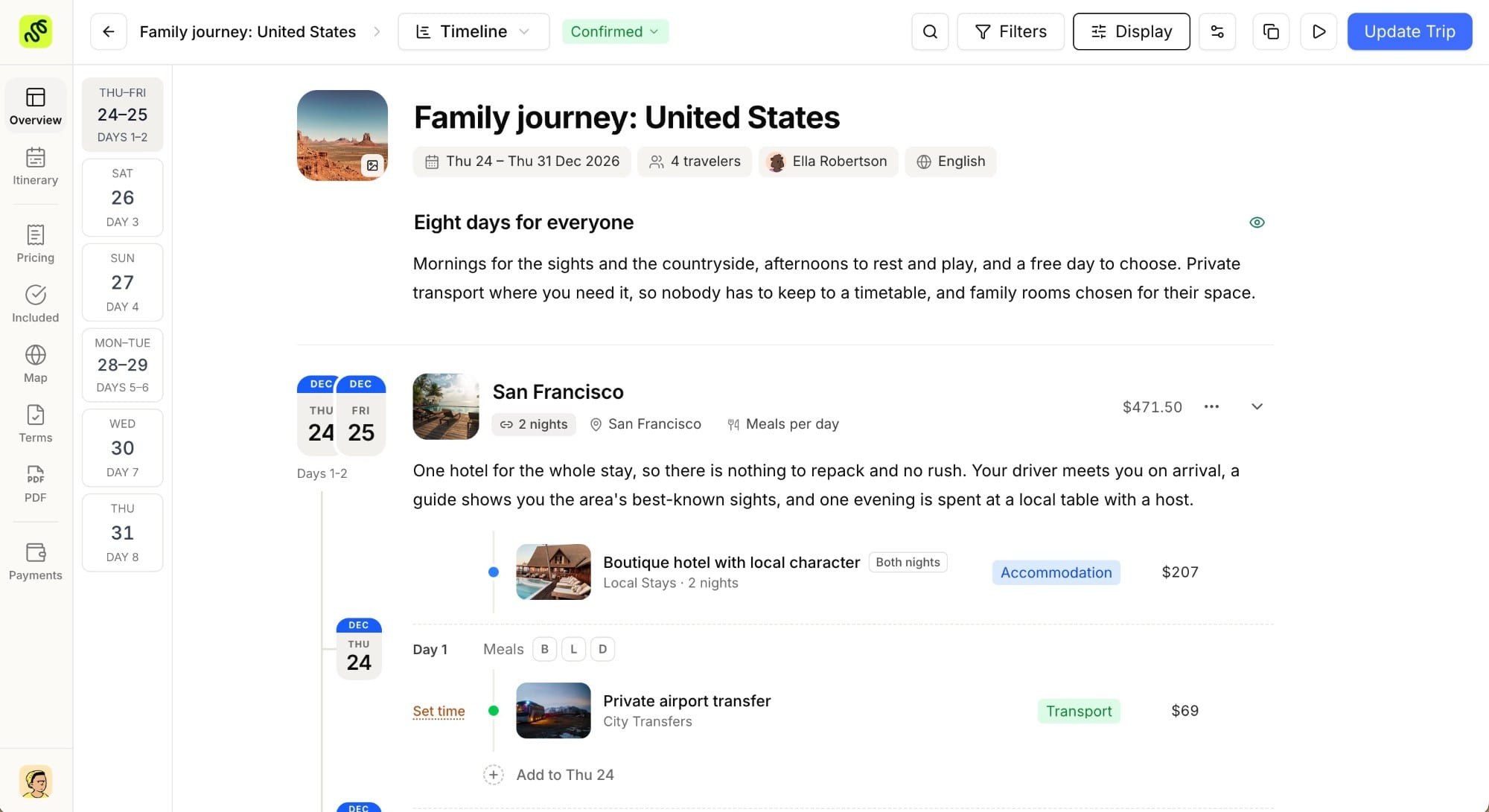
Activities belong in the day-by-day, in the order the client lives them, not in a separate inclusions list that reads as a receipt. Let each experience sit on its day, with its time, so the client can see the shape of the morning and the afternoon. A short summary of the headline experiences near the top helps a client scan, but the real home of an activity is the day it happens on.
A live link keeps the plan current
A programmed day in a static PDF goes stale the moment a slot moves or an optional extra is added. When you share the proposal as a live link, a swapped activity, an updated status, or a newly confirmed booking changes in place, and the client is always reading the trip you can actually deliver rather than the version you emailed last week. That alone removes a whole class of “but the itinerary said” conversations on the day.
Give every day a reason the client can see
Activities are where a client decides the trip was worth the price, so present each experience to be wanted and trusted: name it and say what it is, give the time and the effort, separate what is included from what costs extra, mark what is held, and keep the day honest about its free hours.
TravelBuilderPro gives travel professionals one workspace to build itineraries day by day, keep each experience’s photo, description, and supplier details ready to reuse, track activity rates and booking cut-offs, and send proposals as live links clients actually read. Every signup starts with a 7-day full-feature trial: every feature unlocked, converting to the plan you choose unless you cancel before it ends.
Common questions
01What should an activity entry in a travel itinerary include?
The name of the experience and a plain line on what it actually involves, the start time and duration, what the price includes and what costs extra, the effort and access it demands, one representative photo, and the booking status. For anything with a meeting point, add where and when the client is collected and a local contact. Keep supplier names, net rates, and internal references in your own records, not in the client-facing version.
02How do I present optional activities and extras?
Mark them clearly as optional and show what each one adds, per person or for the group, next to the activity rather than in a lump at the end. Where a day splits into two genuine choices, offer two or three framed options with a one-line reason for each, so the client self-selects instead of feeling steered. The point is that the client always knows what is included and what is an extra before they travel.
03How do I handle an activity that is not confirmed yet?
Give it an honest status, on request or to be booked, and add a short line such as subject to availability where the slot is limited. Clients who book bespoke travel accept that provisional is normal. What they react badly to is discovering that a sought-after experience they thought was secured was never held, so never let an unconfirmed activity read as confirmed.
04Where should activities go in a travel proposal?
On the day they happen, in the order the client will live them, with their times, rather than in a separate inclusions list that reads like a receipt. A short summary of the headline experiences near the top helps a client scan the highlights, but each activity’s real home is the day it belongs to.
Summarize this article with AI
Opens your assistant with the question already written.