When a trip falls apart mid-journey, handle trip disruptions in this order: take the call and own it, get the full facts before you promise anything, stabilize the traveler, then decide between rebooking, rerouting, or refunding with your suppliers while keeping the client informed at every step. After a decade running trips as a tour operator, I learned that a cancelled flight or a flooded hotel is rarely what loses a client. What loses them is silence, a guess that turns out wrong, or the feeling that they were left to sort it out alone. Here is the playbook I wish I had the first time a trip went sideways.
Trip disruptions test the relationship, not just the logistics
Every trip you sell carries a small, unspoken promise: if something goes wrong, you have their back. Clients do not expect you to control the weather or an airline’s operations. They do expect you to answer, to know what to do, and to carry the stress so they do not have to. That is the real product a travel professional sells, and a disruption is the moment it gets tested.
The agencies that keep clients for life are not the ones that never hit a problem. They are the ones whose clients can say, “the hotel was a disaster, but my agent had us in a better one within the hour.” A handled disruption is a story a client tells for years, and it is the single most powerful referral you will ever earn. A mishandled one travels just as far in the other direction.
The first hour: what to do when the call comes
The first hour sets the tone for everything after it. Move calmly, gather before you act, and make the traveler feel held before you make the traveler feel fixed.
Take the call and own it
Answer, or call back fast, even when you do not yet have an answer. The worst thing a client can meet in a crisis is a voicemail and a wall of silence. Say the one sentence that changes the whole interaction: “I’ve got this, give me the details and let me start working on it.” You have not solved anything yet, but you have told them they are not alone, which is most of what they called for. If the trip was built on the ground by a partner, your DMC or local operator is your first call on the operational side, and knowing how to work with a DMC before a crisis is exactly what makes them pick up at 2am.
Get the facts before you promise anything
The fastest way to make a disruption worse is to promise a fix before you understand the problem. Get the specifics first: what exactly failed, where the travelers are right now, whether they are safe and comfortable for the next few hours, what the airline or hotel has already offered, and the hard constraints, such as a connecting flight or a non-movable event. Write it down as they talk. A promise made on half the facts is a second disruption you create yourself.
Stabilize the traveler first
Before you chase the perfect fix, make sure the person in front of the problem is okay for the immediate term: a safe place to wait, a meal, a room for the night if the onward leg is gone. A traveler who is fed and has a bed can wait an hour while you rebook calmly. A traveler stranded in a terminal with no plan cannot, and their panic becomes your pressure. Solve the next few hours first, then solve the trip.
Decide the fix: rebook, reroute, or refund
Once you have the facts and the traveler is stable, you choose the path. There is usually more than one, and the right one balances what the client needs against what it costs and what is actually available.
Know who you can call on the ground
Your options are only as good as your network. This is where a well-kept book of suppliers earns its place: the hotel’s reservations manager who can find a room the booking site says does not exist, the ground operator who can send a car, the airline desk that moves faster than the app. Every one of those is a supplier relationship you built before you needed it. When your suppliers, their contacts, and their terms live in your operations workspace rather than scattered across old emails, you can reach the right person in minutes instead of digging while the client waits.
Weigh the cost of each option
Rebooking the same trip, rerouting through a different city, and refunding the lost portion each carry a different price, a different delay, and a different experience for the client. Lay them out quickly in your own head or on paper: what each costs, who absorbs that cost, how long it takes, and what it does to the rest of the itinerary. Sometimes the cheapest fix for you is the worst for the trip, and sometimes a small spend from your side saves a booking worth ten times as much in future business. Decide with the whole relationship in view, not just the line item in front of you.
Keep the client in the loop as you work
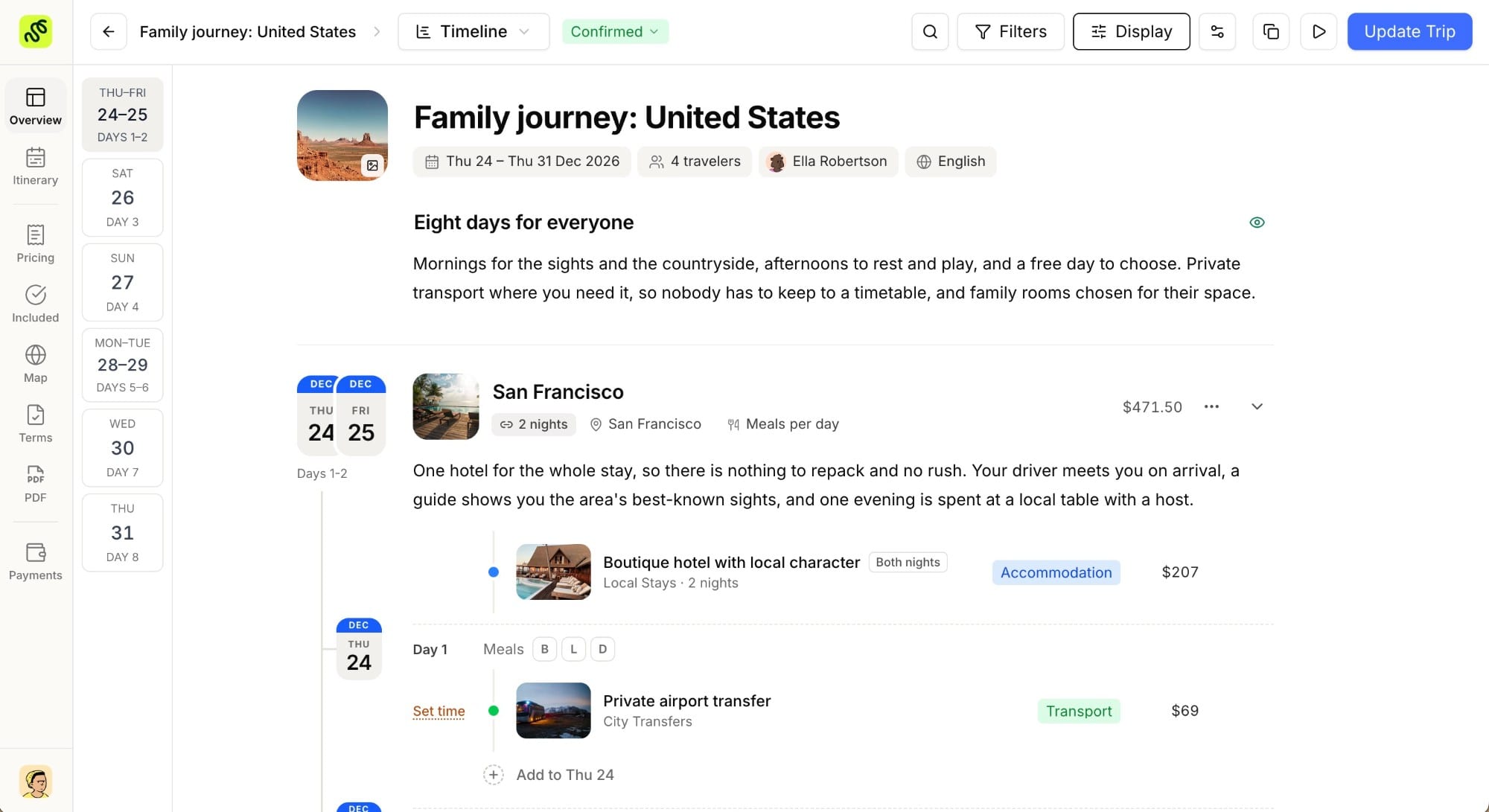
Silence while you work reads to an anxious client as nothing happening. A short message every time something moves, “the airline rebooked you on the 6pm, I’m now sorting the hotel for the missed night,” keeps them calm and keeps them from booking something themselves that fights your fix. If their trip lives on a live itinerary they can open on their phone, the updated flight or the new hotel appears there the moment you change it, so they are always reading the plan you can actually deliver rather than the one that broke.
Who pays, and how to have that conversation
The money question sits under every disruption, and dodging it only makes it louder. Handle it early, clearly, and in the client’s interest, and it becomes a point of trust rather than a fight.
Separate what is covered from what is not
Before you talk money with the client, know the answer yourself. Which costs fall to the airline or hotel under their own obligations, which fall to the traveler’s insurance, which sit with the supplier’s cancellation terms, and which, if any, land on you. A clear line between those four is what lets you speak with authority instead of hedging, and it stops a client from assuming every extra euro is theirs to argue about.
Insurance and the supplier’s terms
Point the client to their travel insurance early and help them document what they will need to claim: receipts, written confirmation of the cancellation, the times and the reasons. You are not the insurer, but you are the person who knows how to build a claim that pays, and walking them through it is a service they remember. Read the supplier’s terms the same way you read a net rate when you quoted the trip: know what is refundable, what is not, and what a sympathetic supplier might waive if you ask well.
When to absorb a cost to save the relationship
Some of the time, the right move is to quietly carry a cost that is not strictly yours. A missed transfer fee, a night’s upgrade to keep a honeymoon on track, the difference on a rebooked seat: spending a little to protect a client worth years of bookings is not weakness, it is arithmetic. The skill is knowing when a goodwill spend buys loyalty and when it just trains a client to expect you to pay for every bump. Decide it deliberately, not under pressure in the moment.
Keep a record while it happens
A disruption generates decisions and conversations fast, and the ones you do not record are the ones that come back to bite you. A light touch of discipline in the moment saves you a painful reconstruction later.
One place for the trip’s moving parts
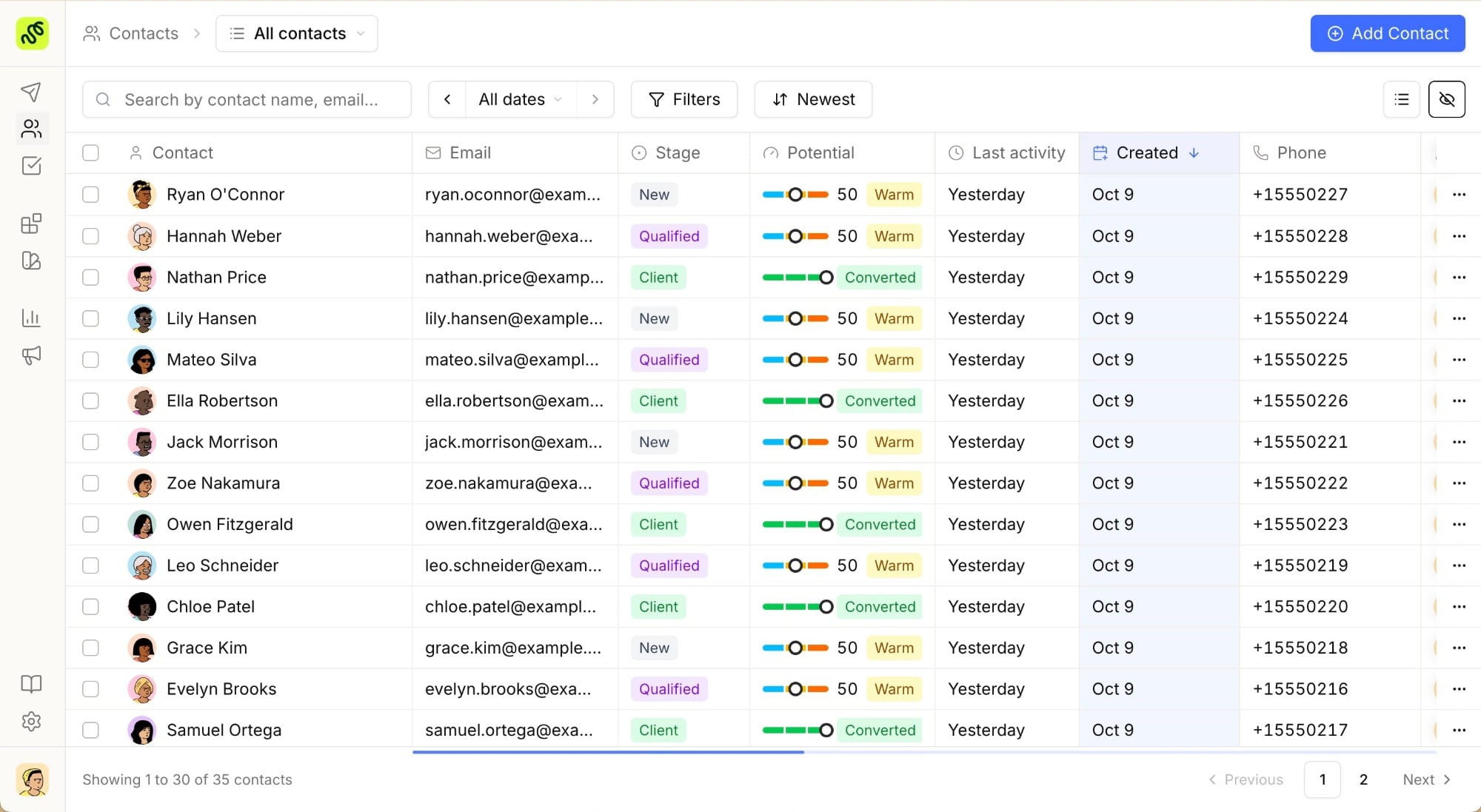
When everything about the trip, the suppliers, the payments, the confirmations, and the client’s history, lives in one place, a disruption is something you manage rather than something you excavate. You can see at a glance what was booked, what it cost, who the supplier contact is, and what has already been paid, which is exactly the information you need to rebook fast. Keeping that in your CRM and operations view, rather than in your memory and your inbox, is the difference between a confident response and a frantic one.
Document decisions and communications
Note what you decided and why, what you told the client, and what each supplier agreed to, as you go. If a refund is disputed three weeks later, or the client remembers the conversation differently, the record settles it calmly. It also means that if a colleague has to pick up the trip while you sleep, they can step in without re-interviewing everyone involved.
After the trip: turn a bad moment into trust
The disruption does not end when the traveler gets home. How you close it out decides whether the memory that sticks is the problem or the way you solved it.
Debrief honestly
Call the client after they are back and ask how it really went. Own what went wrong, thank them for their patience, and tell them what you have changed so it does not happen again. A client who feels heard after a hard trip often becomes more loyal than one whose trip went perfectly, because they have now seen you under pressure and watched you hold.
Follow up and protect the review
A hard trip handled well is worth asking about. A simple, honest follow-up, and where it is warranted a gentle request for a review, turns the client’s relief into the public proof that wins your next booking. Keep the whole history, the trip, the problem, and how it resolved, on the client’s record, so the next time they call you are not starting from a blank page but from a relationship that has already been tested and held.
Be the reason the trip still worked
A disruption is the moment a client finds out what they actually bought from you. Answer, gather the facts, stabilize the traveler, choose the fix with the whole relationship in view, handle the money in the open, and keep a clean record as you go. Do that, and the hard trip becomes the story that wins you the next ten.
TravelBuilderPro gives travel professionals one workspace to keep every trip’s suppliers, rates, payments, and client history together, so when a trip goes sideways you can see what was booked, reach the right supplier, and rebook fast instead of digging through your inbox. Every signup starts with a 7-day full-feature trial: every feature unlocked, converting to the plan you choose unless you cancel before it ends.
Common questions
01What should a travel agent do first when a trip is disrupted?
Answer the client and take ownership before you have a solution: a single line like “I’ve got this, let me start working on it” removes the panic. Then gather the facts, what failed, where the travelers are, whether they are safe for the next few hours, and what has already been offered, and make sure the traveler is stable (a place to wait, a meal, a bed) before you chase the perfect fix. Only then do you choose between rebooking, rerouting, or refunding.
02Who pays when a travel client’s trip is disrupted?
It depends on the cause and the terms. Costs can fall to the airline or hotel under their own obligations, to the traveler’s insurance, to the supplier’s cancellation terms, or occasionally to the agency as a goodwill gesture. Work out that split before you discuss money with the client, point them to their insurance early, and help them document the claim. Absorbing a small cost yourself is sometimes the right call to protect a valuable relationship, but decide it deliberately rather than under pressure.
03How often should I update a client during a disruption?
Every time something moves. A short message such as “the airline rebooked you on the 6pm, I’m now sorting the missed hotel night” keeps an anxious client calm and stops them from booking something themselves that fights your fix. Silence while you work reads as nothing happening, so over-communicate, even when the update is only that you are still on it.
04How do I stop trip disruptions from costing me the client?
Clients rarely leave over the disruption itself, they leave over feeling abandoned or misled. Answer fast, never promise before you know the facts, keep them informed as you work, and be honest about cost. Keep the trip’s suppliers, payments, and history in one place so you can respond in minutes, and debrief honestly afterward. Handled well, a disruption earns more loyalty than a trip that went perfectly.
Summarize this article with AI
Opens your assistant with the question already written.