To present hotels in a travel itinerary well, show each stay the way a client reads it: the property named, the room type and board basis, the number of nights, the location in plain terms, one honest photo, and a clear booking status, laid out so each hotel reads at a glance instead of hiding as a line in a cost table. After a decade running trips as a tour operator, I learned that the hotels are where a client pictures themselves, and where a vague proposal quietly loses the booking. The flights are the part they check for safety. The hotels are the part they fall in love with. Here is how I lay accommodation out so it sells the stay and answers the question before it is asked.
Why clients judge a trip by where they sleep
A client cannot picture a transfer or a guided walk until they are standing in it. They can picture a room. They know what a tired arrival feels like, what a good shower is worth after a long flight, and whether a pool matters to them. So the hotel block is where the abstract promise of the trip becomes something they can feel, and that makes it the part of the proposal they linger on.
It is also where quiet doubt creeps in. A hotel listed as a bare name, no board, no location, no picture, reads as a placeholder the agent has not really thought about. The client starts wondering what else is this thin. Present the stays with care and you are not just describing beds. You are proving you chose each one on purpose.
What to show for every hotel
The goal is enough for the client to feel the stay and trust the choice, not a supplier contract pasted into a proposal. For each hotel, give them these.
Name the property, always
Name the hotel, in full, every time. A client who can search the property, read its reviews, and see it on a map trusts the proposal far more than one handed 4-star hotel, central. If you genuinely cannot name it yet, because a room is not held and you may substitute, say that plainly rather than hiding behind a category. A named hotel is the single biggest trust signal in the accommodation section, and withholding the name to protect a margin usually costs you the booking instead.
Room type, board basis, and the number of nights
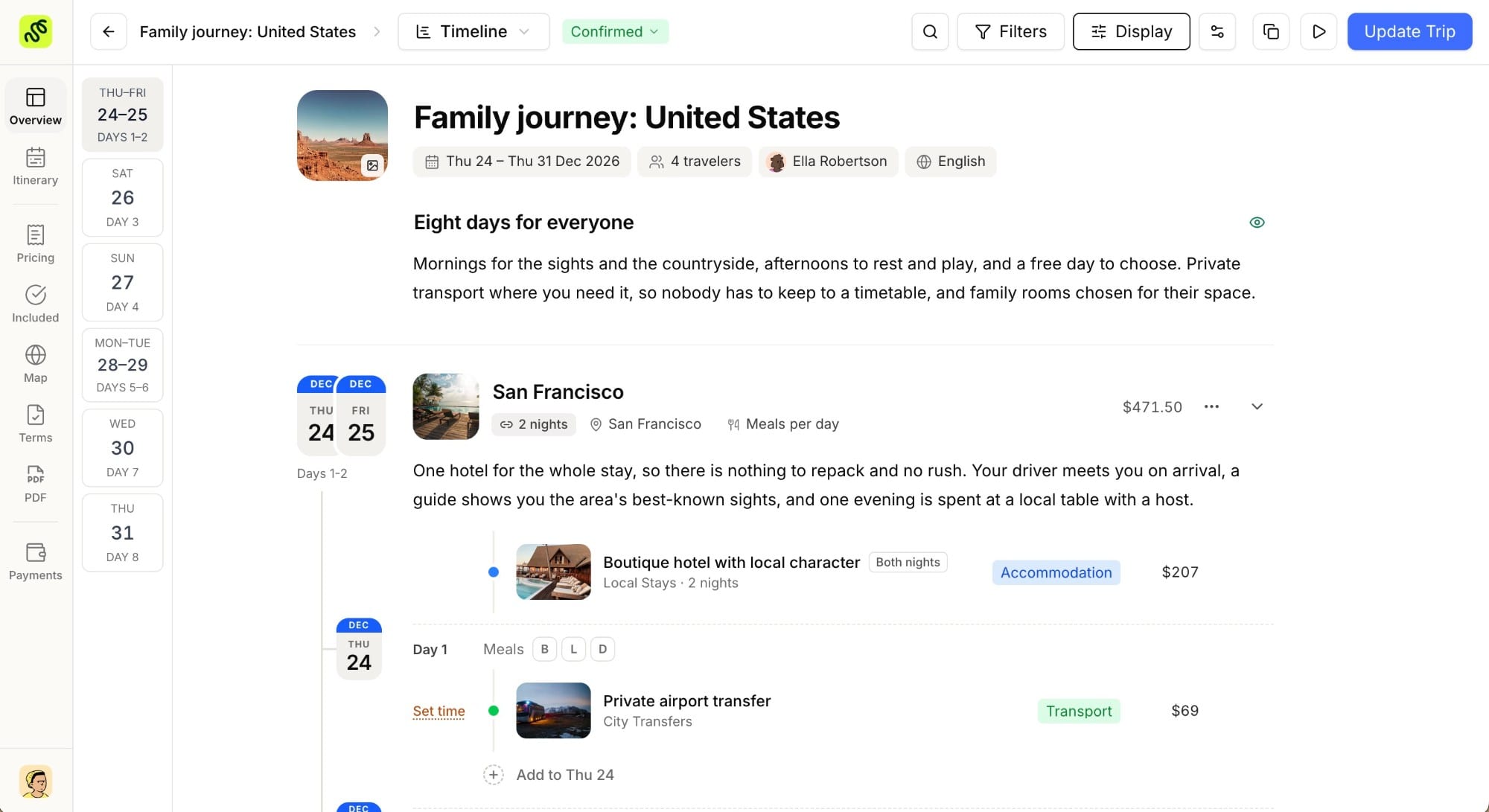
Three lines that remove most of the back-and-forth. State the room type the way the client will recognise it (Deluxe Garden View, king bed), the board basis in words rather than a code (breakfast included, half board, room only), and how many nights they stay. Board basis is the one clients most often assume, and a trip that turns out to be room only when they pictured breakfast feels like a bait and switch even when your price was honest. Spell it out once, in the proposal, and you never have that conversation at check-in.
Location in terms the client understands
Central means nothing. Tell them what the location buys them: a ten-minute walk to the old town, beachfront, a quiet neighbourhood twenty minutes from the noise, or next to the station for an early train. Location is where your destination knowledge shows, and it is often the real reason you chose one property over a cheaper one down the road. Make that reasoning visible instead of leaving the client to wonder why this hotel and not the one their friend stayed in.
One photo that earns its place
One strong, representative image beats a gallery of six. Choose the shot that matches what you sold in the words: if you promised a sea view, show the view, not the lobby. Avoid the glossy stock render that looks nothing like the room they will get, because the gap between the picture and the reality is exactly what generates a complaint. A good itinerary builder keeps a photo and a short description attached to each property so you are not rebuilding the stay from scratch on every proposal.
When to give the client a choice of hotels
A choice can lift the booking value or it can stall the decision. Which one depends entirely on how you present it.
Offer a choice only where it helps
Do not offer options on every night out of habit. A client facing five hotel decisions across a ten-day trip freezes, and a frozen client does not book. Offer a choice where it genuinely changes the trip for them: the splurge night versus the sensible one, the city-centre convenience versus the quiet retreat. Everywhere else, make the call yourself and present one confident recommendation. That is what they are paying you for.
Frame it good, better, best
When you do offer options, give two or three, not a menu, and frame them so the trade-off is obvious: the solid choice, the upgrade, and the special one. This is the same logic as a tiered proposal applied to a single stay, and it works because it moves the question from “do I book?” to “which one?”. Most clients self-select upward when the better room is right there and clearly described, so you lift the trip value without ever pushing.
Show the price gap without hiding it
If an upgrade costs more, show how much, per night or for the stay, next to the option. Burying the difference or making the client ask for it reads as a sales trick and kills the trust the rest of the proposal built. Presented honestly, the price gap usually sells the upgrade on its own: a client can see that eighty euros a night buys the sea view for the nights that matter, and they decide with their own eyes rather than feeling steered.
Booking status and the deadlines clients never see
The part of accommodation that goes wrong operationally, not editorially. A beautiful hotel block means nothing if the room quietly releases before the client pays.
Confirmed, on request, or to be booked
Give every stay an honest status. Confirmed means held in the client’s name. On request means you have asked the supplier and are waiting. To be booked means nothing is held yet and the price and availability can still move. Clients understand provisional, what they cannot forgive is discovering that the hotel they thought was theirs was never held. Marking status also protects you: it sets expectations in writing before a deposit changes hands.
What to say when the room is not yet held
When a hotel is not confirmed, add one plain line: subject to availability at the time of booking. It is not a weakness, it is how the trade works, and clients who book bespoke travel know it. What they react badly to is silence followed by a surprise. If a specific room is likely to sell out, say so and turn it into a reason to decide, rather than letting the client discover the hard way that waiting a week cost them the property.
Allotments and release dates
Behind the client-facing calm sits a clock they never see. Rooms held on allotment carry release dates, and negotiated rates expire. When you keep your suppliers, rates, and the trips that draw on them in one operations view, those deadlines stop living in your head and in scattered emails. You can tell the client confidently how long a price holds, because you can actually see when the room releases, instead of promising a rate you may not be able to honour next Tuesday.
Where to present hotels in a travel itinerary
A hotel section written this carefully deserves a place in the proposal that respects it, and a format that keeps it true.
Put the hotels where the eye lands
Accommodation should appear twice: once as a clean summary the client can scan (which hotels, how many nights each, board basis), and again in context on the right day, so the stay sits next to the day it belongs to. Do not scatter hotels only through the day-by-day with no overview, because a client comparing two proposals wants to see all the stays at once, and do not dump them in a pricing appendix where they read as line items rather than places.
Keep the price picture honest
Show the accommodation inside the full cost picture, not as a number divorced from the stay. If a resort fee, a city tax, or a tourist levy is collected locally and is not in your price, name it in the proposal rather than letting it ambush the client at checkout. The surprise charge at reception is the fastest way to turn a happy traveller into a bad review, and it is almost always avoidable with one line in the proposal.
A live link beats a frozen PDF
A hotel list in a static PDF is out of date the moment a property releases or a rate changes. When you share the proposal as a live link, a swapped hotel or an updated status changes in place, and the client is always reading the current trip rather than a version you emailed last week. That alone removes a whole class of “but the PDF said” conversations, and it keeps the stay you are selling and the stay you can actually deliver as the same thing.
Put your hotels where clients can picture the stay
Hotels are where a client decides whether they want this trip, so present each stay to be pictured and trusted: name it, show the room and board, place it, give it one honest photo, and never let an unconfirmed room pretend to be held.
TravelBuilderPro gives travel professionals one workspace to build itineraries, keep each property’s details and photos ready to reuse, track supplier rates and release dates, and send proposals as live links clients actually read. Every signup starts with a 7-day full-feature trial: every feature unlocked, converting to the plan you choose unless you cancel before it ends.
Common questions
01What should a hotel entry in a travel itinerary include?
The property name in full, the room type, the board basis in plain words (breakfast included, half board, room only), the number of nights, the location described by what it gives the client, one representative photo, and the booking status. Keep supplier codes, net rates, and internal references out of the client-facing version: they belong in your own records, not in the proposal.
02Should I show more than one hotel option per night?
Only where the choice genuinely helps the client, such as a splurge-versus-sensible decision. Offering options on every night stalls the booking. Where you do, give two or three framed as good, better, best, and show the price difference next to each so the client can decide with their own eyes rather than feeling steered.
03How do I present a hotel that is not confirmed yet?
Mark its status honestly as on request or to be booked, and add a short line such as subject to availability at the time of booking. Clients who book bespoke travel accept that provisional is normal. What they do not forgive is believing a room was held when it was not, so never let an unconfirmed hotel read as confirmed.
04Where should accommodation go in a travel proposal?
In two places: a scannable summary of all the stays near the top, and each hotel again in context on the day it belongs to. Avoid burying the hotels in a pricing appendix, where they read as line items instead of places the client is about to stay.
Summarize this article with AI
Opens your assistant with the question already written.