Food is the part of a trip clients talk about for years, and it is also the part most itineraries get vague about. To present meals in a travel itinerary well, treat each day’s eating the way you treat its flights and hotels: say which meals are included in the price, where they happen and why you chose the place, which ones are left open, and how a dietary need will actually be handled once the client is at the table. Do that and dinner stops being a question mark the client emails you about at 11pm. After ten years running a tour operation, meals were where a trip either felt cared for or felt like a spreadsheet with a logo on top.
Why meals deserve a real place in the itinerary
Clients do not read an itinerary for the logistics. They read it to picture their days, and food is a huge part of how a day feels. A beach is a beach until you tell them about the grilled fish shack behind it. Yet meals are usually the line that gets cut to a single word or dropped entirely, which is exactly backwards, because food is where anticipation and anxiety both live.
What clients actually want to know about food
Three questions sit under almost every meal a client asks about. Is this one paid for already, or am I spending again tonight? Can the kitchen handle the fact that my daughter cannot eat gluten? And is this place actually good, or is it just the hotel restaurant because it was easy? A proposal that answers those three quietly, day by day, feels like it was built by someone who has eaten the trip. One that leaves them open feels like a draft.
What a vague meal line costs you
“Dinner” on its own is not information, it is a placeholder, and the client reads the silence as uncertainty. Worse is the itinerary that lists every breakfast but goes quiet the moment meals are on the client’s own account, because the gap reads as a hidden cost rather than a free evening. I have watched a strong week wobble because a couple assumed half board and arrived at a hotel that served breakfast only, then felt nickel-and-dimed for the rest of the trip. The meal is cheap to get right on paper and expensive to get wrong in the room.
What every meal line in a travel itinerary should tell the client
Give each day’s meals the same fixed shape you give a flight block, so the client learns to read it at a glance. The point is not to describe every dish, it is to remove every question before it is asked.
Which meals are included, in plain markers
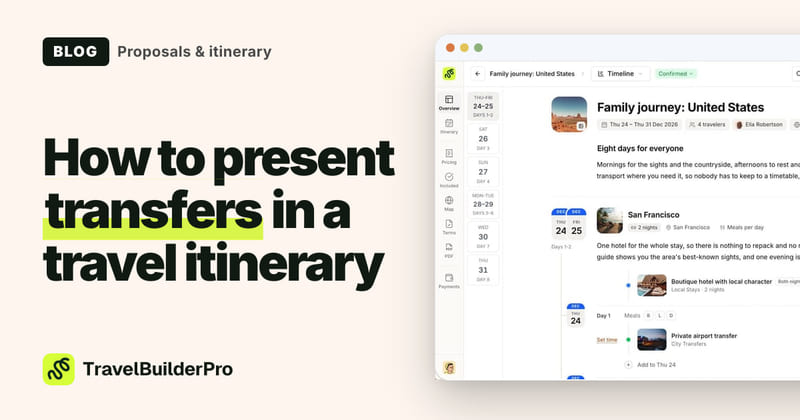
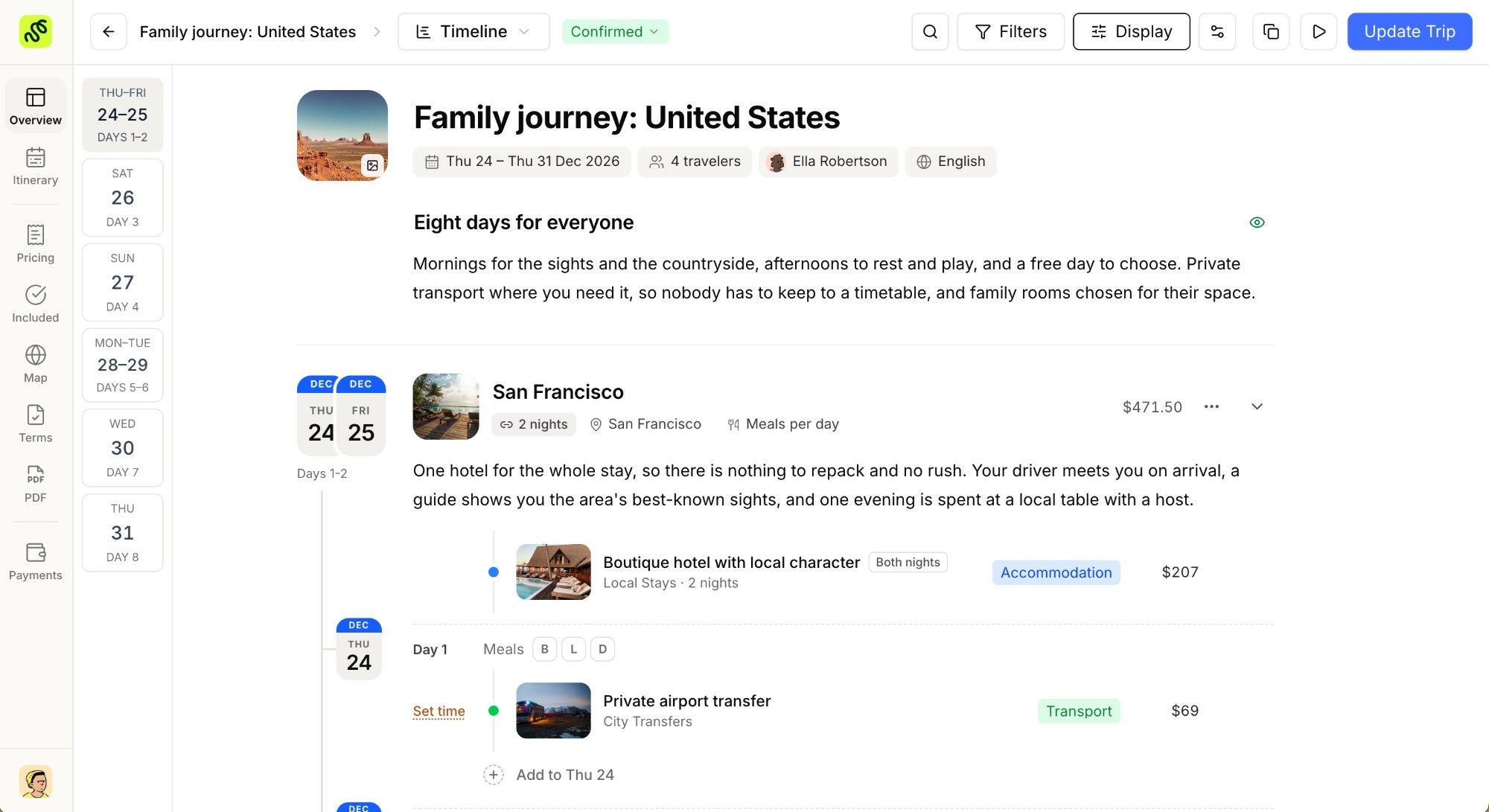
The simplest, most reassuring convention in the business is to mark each day with the meals that are covered: breakfast, lunch and dinner, often shortened to B, L and D at the end of the day’s line. A client scanning the trip can then see instantly which evenings are theirs to plan and which are already handled. Spell the convention out once at the top so no one has to guess what the letters mean, then use it the same way on every single day.
Where the meal happens and why you chose it
An included dinner is worth a sentence, not just a checkmark. Name the place, say what kind of food it is, and give the one detail that explains the choice: the terrace over the harbor, the family that has run it for three generations, the tasting menu you booked because it was the client’s anniversary. That sentence is what turns a logistical fact into a reason to look forward to the evening, and it quietly signals that someone chose it on purpose.
What is optional and roughly what it costs
For the meals the client pays for themselves, do not leave a blank and do not dump a link to a review site. Give two or three curated picks near where they are staying, with a rough price band and a line on what makes each one worth it. A client who sees “three good options from casual to special, roughly within this range” feels guided rather than abandoned, and you have protected them from the tourist trap next to the hotel without pretending to control a meal you are not booking.
How to handle dietary needs without drama
Dietary requirements are where a meal line stops being copywriting and becomes operational trust. The itinerary can promise that a need is handled only if the work behind it actually happened, so build the handling before you write the promise.
Capture the restriction at booking, not at the table
Ask about allergies, intolerances and strong preferences as part of the trip brief, long before anyone sits down to eat. A need written into the file at booking can be routed to the right hotels, restaurants and ground teams in advance. A need discovered on day three is a scramble. Put the question in your intake so it is never left to the client to remember to mention it.
Pass the information down the chain
Knowing a client is coeliac helps no one if the kitchen never hears it. The restriction has to travel from your file to whoever is actually cooking, which usually means your local DMC or the hotel receiving it in their paperwork before the client arrives. When you keep restaurants and ground partners as proper records rather than loose notes, that handoff is a line in a brief instead of a frantic message the night before.
Set honest expectations
Part of handling a dietary need well is being straight about its limits. In some places a strict vegan or a severe nut allergy is easy, in others it genuinely is not, and a client is far happier knowing that in advance than discovering it over a plate they cannot eat. Say where the trip is confident and where the client should carry a backup snack or confirm directly. Honesty here reads as competence, not as a disclaimer.
Present meals in a travel itinerary where they happen
The common mistake is to sweep every meal into a “dining” appendix at the back of the proposal. Meals are not a category of their own, they are moments inside days you have already designed, so present them where they happen.
Place each meal where it falls in the day
When you build the trip in your itinerary builder, put breakfast at the top of the day, the long lunch after the morning walk, the booked dinner at the end. Read top to bottom, the day then has a rhythm a client can feel: wake, eat, explore, rest, gather for dinner. The same instinct that makes you sequence activities into a day that breathes applies to meals, because eating is half of how the day is paced.
Let the standout meals do some selling
Some meals are not logistics, they are the reason the client picked that region, and those deserve real space. The cooking class in the market, the dinner in the vineyard, the breakfast with a view earned by an early start: write those the way you would write a marquee excursion, because they sell the trip as hard as any sight. Treat the everyday meals with a light touch and spend your words on the two or three that people will still describe when they get home.
The operational side behind an effortless meal line
A meal line reads as effortless only when the records behind it are in order. Everything the client trusts on the page rests on a supplier base they never see.
Keep restaurants and rates with your other suppliers
Restaurants, caterers and the venues that run private dinners are suppliers like any other, with contacts, rates and quirks worth remembering. When they live in your operations workspace beside hotels and transport, you can reuse the place that delighted a client last season, quote an included dinner at a rate that has not expired, and avoid rebuilding the same shortlist from scratch on every trip. The polished recommendation in the proposal is always downstream of a tidy supplier base.
Lean on your DMC for local knowledge
No one knows a city’s tables like a good ground partner. Your DMC knows which kitchen will take a dietary need seriously without making the client feel difficult, which terrace is worth the detour, and which famous name is coasting on its reputation. Build that knowledge into your records as you earn it, trip after trip, so the next itinerary to the same place starts from everything you already learned rather than a blank page and a search engine.
Put every meal in the day it belongs to
TravelBuilderPro keeps your restaurants, suppliers and days in one workspace: record a place once, drop an included dinner straight into the right moment of a branded itinerary, mark what is covered, and carry a client’s dietary needs from the trip brief through to the ground team. Try every feature free for 7 days.
Common questions
01How do I show which meals are included in a travel itinerary?
Use a consistent marker on every day, most commonly B, L and D for breakfast, lunch and dinner, placed at the end of the day’s line so the client can see at a glance what is covered. Explain the shorthand once at the top of the proposal. The goal is that a client scanning the trip never has to wonder which evenings are already paid for and which are theirs to plan and budget.
02Should I recommend restaurants for the meals clients pay for themselves?
Yes, but curate rather than dump. Two or three vetted picks near where the client is staying, each with a rough price band and a reason it is worth it, guide the client without pretending to control a booking you are not making. An open-ended list or a link to a review site puts the work back on them and risks sending them to the tourist trap you were trying to help them avoid.
03How should a travel agency handle client dietary requirements?
Capture allergies, intolerances and strong preferences at booking, as part of the trip brief, then pass them down the chain to the hotels, restaurants and ground teams before the client arrives. Keep those partners as proper supplier records so the handoff is reliable. Finally, be honest where a destination cannot easily accommodate a strict need, so the client can plan around it instead of being caught out at the table.
04How much detail should a meal get in the itinerary?
Match the words to the stakes. An everyday breakfast at the hotel needs a marker and nothing more. A dinner you booked for a special occasion, or a meal that is itself a reason for the trip, deserves a full sentence or two on the place and why you chose it. Over-describing the ordinary meals buries the standout ones, so spend your detail where it actually changes how the client feels about the day.
05Where should meals go in a travel proposal?
Inside the day they belong to, not in a separate dining section at the back. Put breakfast at the start of the day, lunch after the morning, dinner at the end, so the itinerary reads in the order the client will live it. Burying meals in an appendix forces the client to cross-reference two parts of the document at the exact moment they are trying to picture an evening.
Summarize this article with AI
Opens your assistant with the question already written.