Pricing a trip is only half of the money conversation. The other half is your travel agency payment schedule: when the client pays, how much, and against which of your own deadlines. Get it right and the client’s money lands in your account before you owe the suppliers, your cash flow stays calm, and nobody ends up funding a stranger’s holiday out of pocket. Get it wrong and you become the bank. When I ran a tour operation between 2007 and 2017, the schedule we attached to every quotation protected the business as much as any single margin decision. This guide covers how to structure deposits, interim payments, and the final balance so the timing works in your favour, not against it.
What a travel agency payment schedule is
A payment schedule is the sequence of dates and amounts a client agrees to when they book. At its simplest it has three moments: a deposit to confirm, sometimes an interim payment for a large commitment, and a final balance before departure. Each moment is tied to a real event on your side, usually a supplier deadline or a cancellation cutoff.
The mistake I see most often is treating the schedule as an afterthought, a line added under the total once the trip is designed. It is the opposite. The schedule decides whether you ever carry a client’s trip on your own money, and for an independent designer or a small agency, carrying even one large trip on the company card can be the difference between a good month and a stressful one. Design it deliberately.
The deposit: how much to take, and when
The deposit does two jobs at once. It confirms the client is serious, and it covers the money you have to commit the moment you start booking. Those two jobs pull in the same direction, which is convenient: the deposit should be large enough to cover your own non-refundable outlay at the point of confirmation.
A common structure for tailor-made travel is a deposit in the region of 20–30% of the trip value. That works as a default, but treat it as a floor you adjust upward, not a fixed rule. Ask yourself one question before you set the number: what do I owe suppliers the day this client says yes? If the trip includes a flight, a peak-season lodge, or a small-group departure that you have to secure immediately, your real exposure on day one might be 40% or more. In that case a 25% deposit leaves you funding the gap yourself.
So the rule I settled on is simple: the deposit must at least cover what becomes non-refundable the moment you confirm. Whenever the net rate you commit up front exceeds the standard deposit, raise the deposit to match it. Clients almost never argue when you explain that the deposit secures specific, named things (a suite that sells out, a guide who books up months ahead) rather than a vague hold.
Take the deposit before you commit a single supplier. Not the same day, not “once I’ve started”, before. The client’s booking is not real until their deposit clears, and the surest way to lose money in this business is to hold space on trust and then watch the client go quiet.
Interim payments and the supplier deadline problem
Most short trips need only a deposit and a balance. Longer or higher-value trips often need a payment in the middle, and the reason is almost always a supplier deadline that falls well before departure.
Here is the situation that used to catch me out. A client books a big trip six months ahead on a 25% deposit. Four months out, a lodge or a cruise line wants its full balance, and that balance is more than the deposit I am holding. The gap is now mine to fund for two months until the client’s final payment is due. Do that across several trips at once and you have quietly turned your agency into an interest-free lender.
An interim payment closes that gap. Map your suppliers’ payment deadlines against the client’s schedule, find the earliest point where what you owe exceeds what you hold, and put an interim payment just before it. The client pays in step with your real obligations, and you never advance your own cash to cover someone else’s trip. This is the single most useful habit I picked up, and it is invisible to the client: they simply see a sensible schedule, not the cash-flow logic underneath it.
The final balance: when to collect it
The final balance should be due before your last cancellation cutoff, not after it, and comfortably before departure. The number I used for years was 60 days out for most trips, tightening to 90 days for anything with strict supplier terms and relaxing only for late bookings that fell inside those windows anyway.
Why before the cancellation cutoff? Because a balance due date that sits after the point where the trip becomes fully non-refundable protects nobody. If a client can cancel for a modest fee the day before their balance is due, you are exposed for the whole period in between. Line the balance date up so that by the time the client is fully committed financially, the money is already with you.
Give a real due date, a calendar date, not “eight weeks before travel”. People act on dates and ignore durations. And send the request early enough that a failed card or a slow bank transfer still leaves room to fix things before the trip is at risk.
A payment schedule template you can adapt
Here is the shape I recommend as a starting point. Adjust the interim step in or out depending on the trip value and the supplier terms, and always let your real non-refundable exposure override the default percentages.
| Moment | When it’s due | Typical amount | What it should cover |
|---|---|---|---|
| Deposit | At confirmation, before you book anything | 20–30% (higher if day-one commitments are large) | Everything that becomes non-refundable the moment you confirm |
| Interim payment | Just before your earliest supplier balance deadline | Enough to keep client funds ahead of your obligations | The gap between the deposit and the biggest early supplier balance |
| Final balance | 60–90 days before departure, before the last cancellation cutoff | The remainder | The rest of the trip, collected while you can still act if a payment fails |
Two rules keep this honest. First, the client’s payments should always run ahead of your commitments, never behind them. Second, every date on the schedule should map to something real on your side. A schedule built from your actual deadlines is defensible, easy to explain, and almost never negotiated.
Refunds, cancellations, and the buffer that saves you
A payment schedule is only as safe as the cancellation terms sitting behind it. State clearly, in the same document as the schedule, what happens to each payment if the client cancels. The deposit is usually non-refundable because it covers costs you have already committed, and that is fair as long as you have explained what it secures.
The detail people forget is the buffer for your own service. When suppliers keep a percentage on cancellation, your terms should account for the work you have already done designing and coordinating the trip, which does not become undone because the client changed their mind. If you charge a separate planning fee, this matters less, and I have written separately about whether and how to charge a planning fee. If you do not, build a modest non-refundable element into the deposit so a cancellation never leaves you working for free.
Put the cancellation terms next to the schedule, not buried in a terms-and-conditions link nobody opens. A client who understands the terms before they pay almost never disputes them later. A client who discovers them at cancellation almost always does.
How to run this without chasing people
The best schedule in the world fails if collecting on it depends on you remembering to send emails. This is where the timing logic has to become an actual system rather than a good intention.
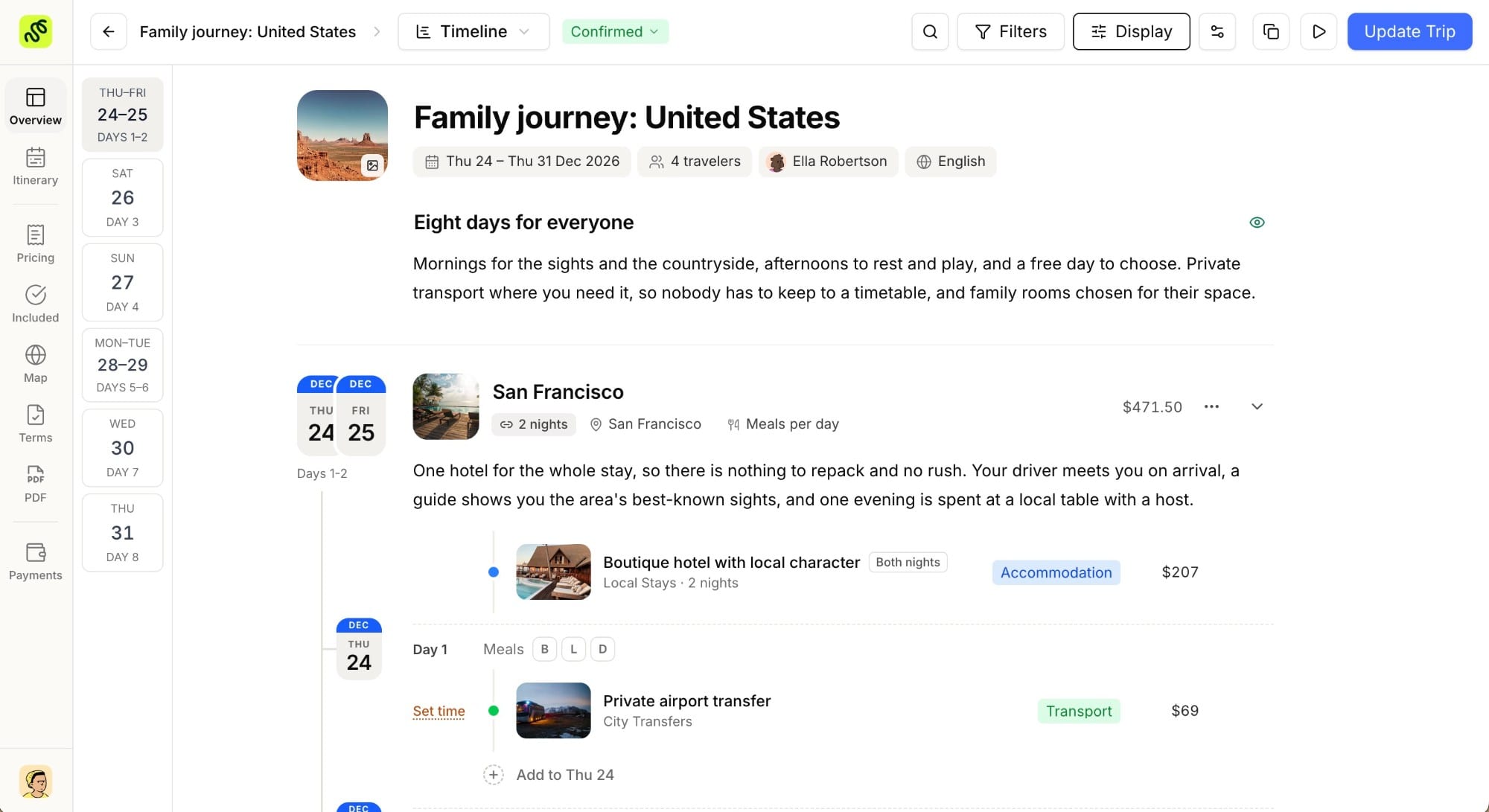
Send the schedule as part of a live, selectable proposal rather than a paragraph at the bottom of a PDF, so the client sees and agrees to the dates when they book, not weeks later. Once the trip is confirmed, the deposit, any interim payment, and the balance become dated tasks, and each one needs a reminder that fires whether or not you are thinking about that client that week.
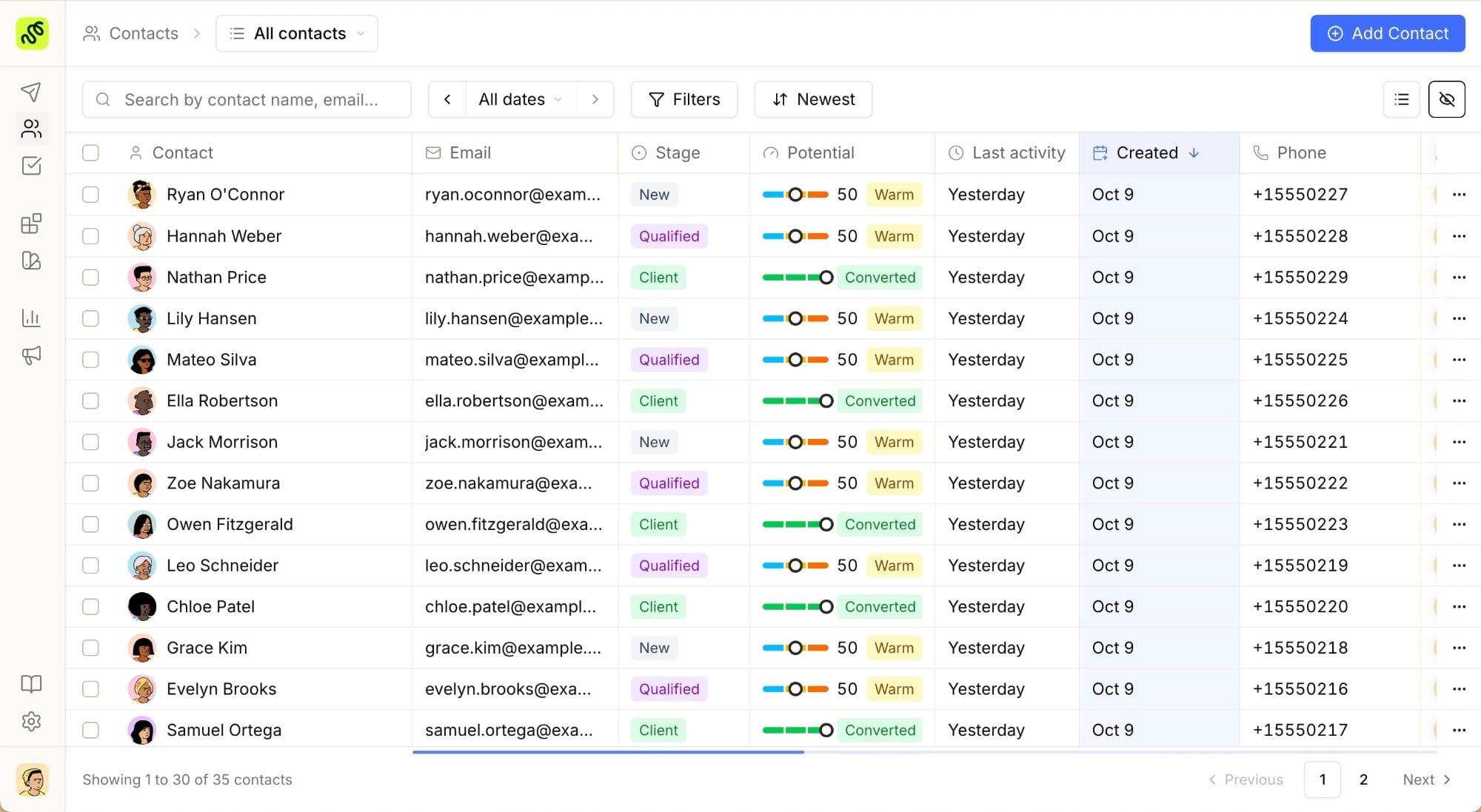
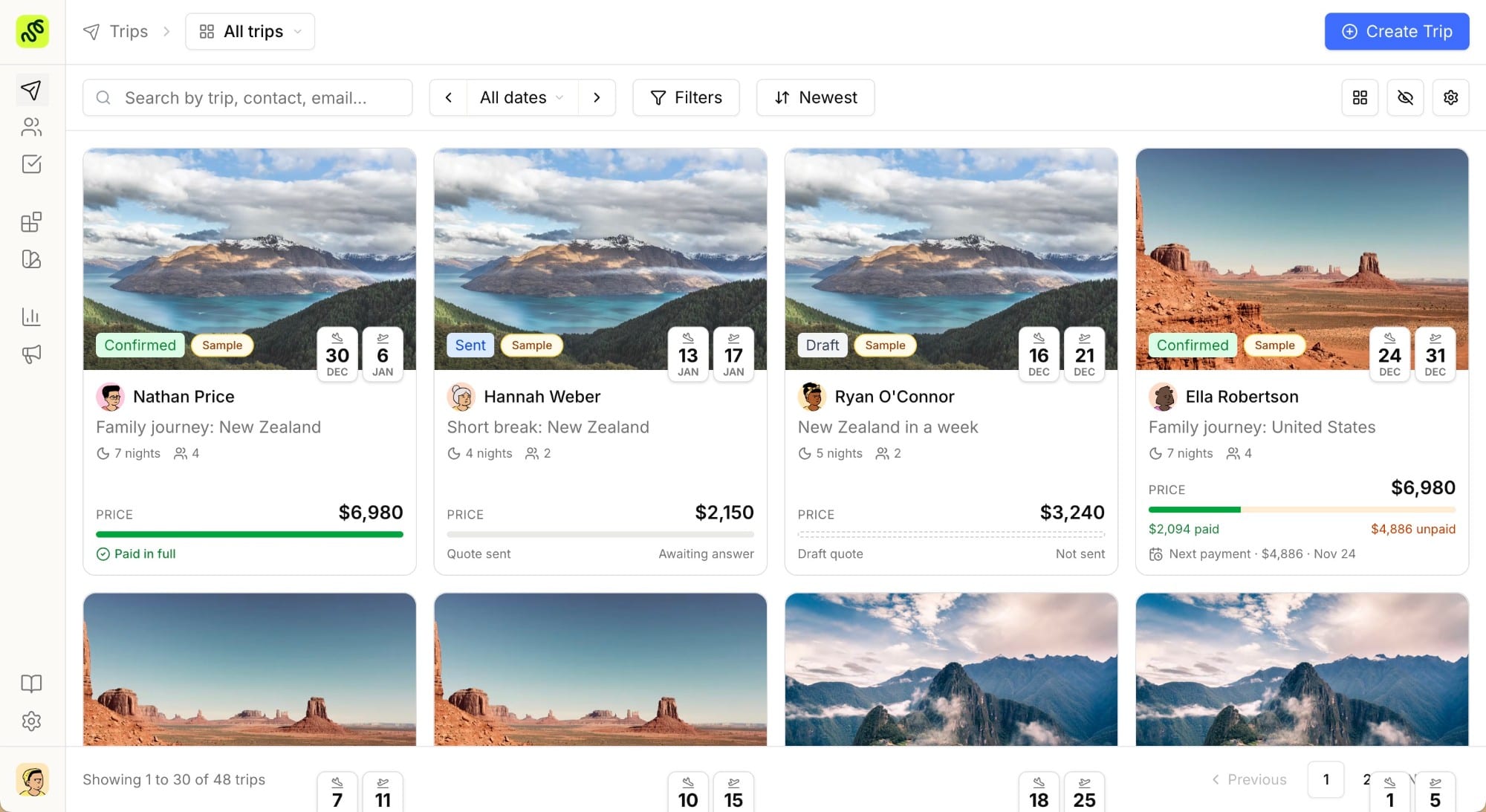
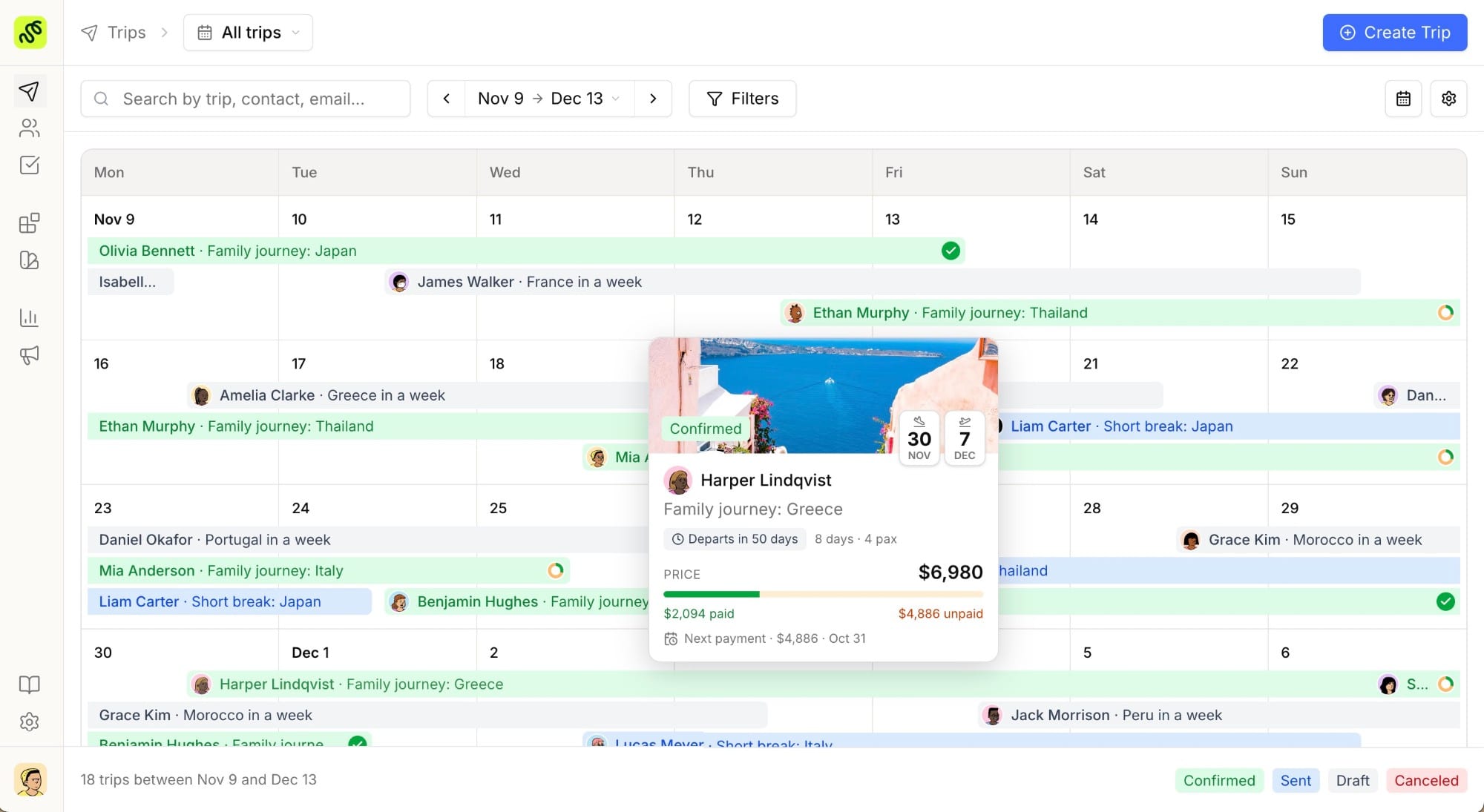
Let your CRM carry each payment as a dated task against the booking, so a due date that passes turns overdue and surfaces on its own instead of waiting for you to remember it. Building the trip in an itinerary builder that carries pricing through to the proposal keeps the numbers consistent from quote to schedule, so the amount the client agrees to is the amount you actually costed, and the booking shows a clear paid and outstanding split as each payment lands. The point is not to automate the relationship. It is to make sure a missed payment surfaces on its due date instead of surfacing three weeks later when you happen to reconcile the account.
If you want the schedule to sit inside a proposal that is built to convert in the first place, our proposal checklist covers the structure a strong proposal needs before you attach the payment terms.
Keep every payment on schedule, automatically
A payment schedule protects your cash flow only if you actually collect on it. TravelBuilderPro keeps the whole thing in one place: price the trip, send it as a live proposal, then track each payment against the booking as a paid and outstanding split, with due dates that sit on the trip as tasks and turn overdue the moment they slip, right beside your weekly recap of what is still unpaid. Every signup opens with a 7-day full-feature trial.
Common questions
01How much deposit should a travel agency take?
A deposit of roughly 20–30% of the trip value is a common default for tailor-made travel, but treat it as a floor. The real rule is that the deposit must at least cover whatever becomes non-refundable the moment you confirm the booking. If your day-one supplier commitments are larger than the standard deposit, raise it to match, otherwise you are funding the gap yourself.
02When should the final balance be due?
Before your last supplier cancellation cutoff, and comfortably before departure. Sixty days out works for most trips, tightening to ninety days for anything with strict supplier terms. The key is that the client is fully paid up before the trip becomes fully non-refundable, so you are never exposed for a period where they could still cancel cheaply.
03Do I need an interim payment on every trip?
No. Most short trips need only a deposit and a final balance. An interim payment earns its place when a supplier balance falls due well before departure and exceeds the deposit you are holding. It closes the gap so the client’s money stays ahead of your obligations instead of you advancing your own cash.
04Should the deposit be refundable?
Usually not, because it covers costs you commit as soon as you book. That is fair as long as you explain what the deposit secures and state the terms in the same document as the schedule. If you do not charge a separate planning fee, build a small non-refundable element into the deposit so a cancellation never leaves your design work unpaid.
05How do I stop clients from paying late?
Give real calendar dates rather than durations, agree the schedule when the client books rather than after, and automate the reminders. A dated task with an automatic nudge before each due date, plus a follow-up the moment a payment slips, catches problems on the day they happen instead of weeks later.
Summarize this article with AI
Opens your assistant with the question already written.